Take the first step to your dream smile
Now welcoming new private patients in our beautiful relaxing Truro clinic.
The dentist can feel daunting for those with dental anxiety, which is why Pure Dental offers dental sedation to help you relax and feel more comfortable. Sedation isn’t only for anxious patients, it’s also used for advanced treatments, to help longer or more complex procedures calm, manageable and a more positive experience.
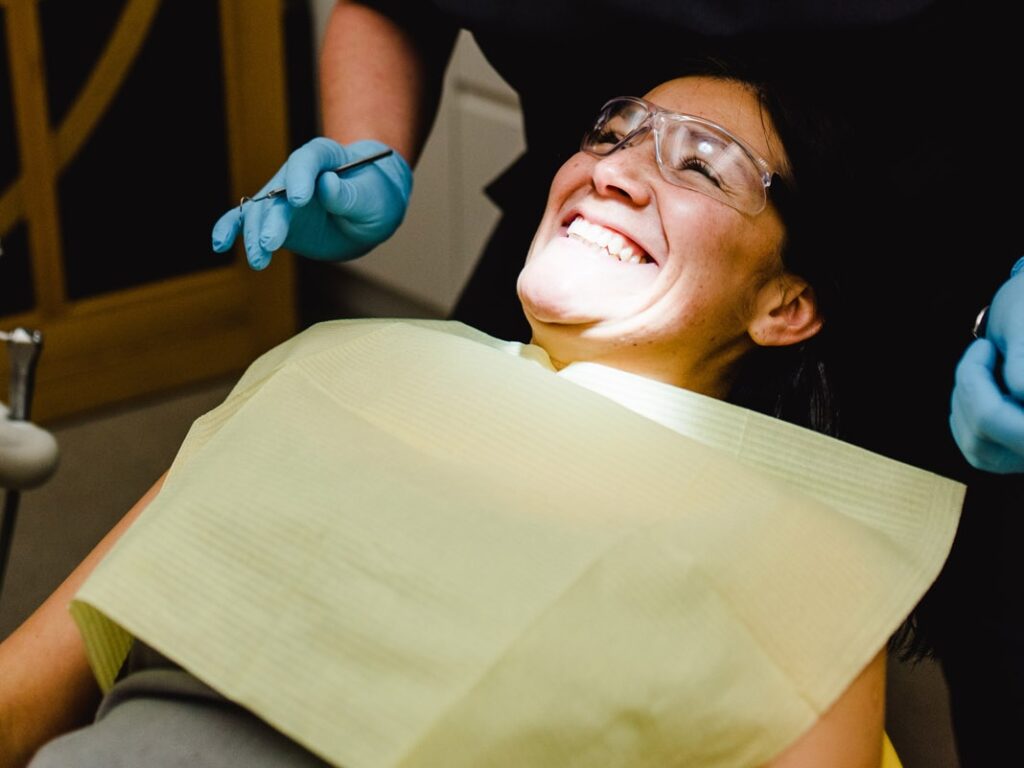
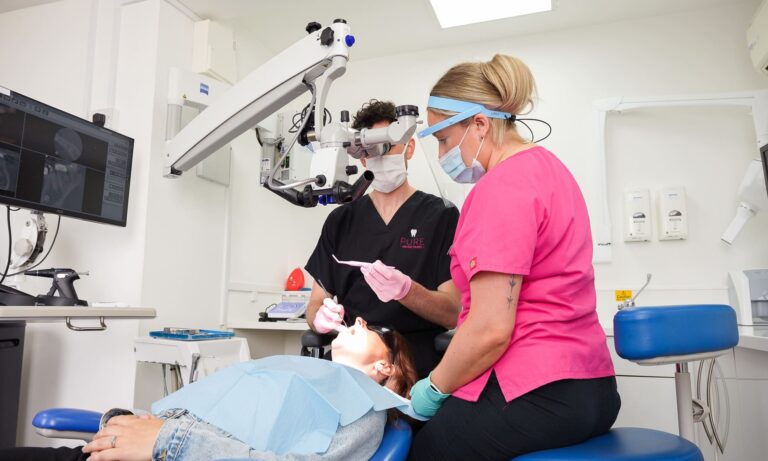
Dental sedation is a treatment where medication is given to help patients relax during dental procedures. Dental sedation may be recommended if you suffer from severe dental anxiety or are about to have a long complex treatment, like periodontal surgery.
During dental sedation, you’re conscious and able to respond to instructions, but discomfort / pain is not felt.
Your dentist may recommend dental sedation if you experience any of the following:
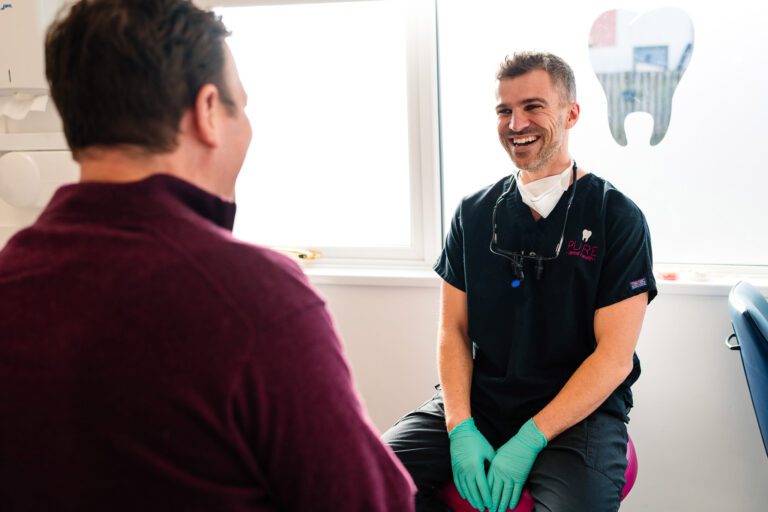
There are a few different types of dental sedations, and your dentist will recommend the one that suits you best. They’ll consider how anxious you feel, how long the treatment will take, your health, age and what you’re comfortable with.
Although not a treatment we offer at Pure Dental, nitrous oxide is one of the most common forms of dental sedation. You inhale the gas through a mask or nosepiece, and after around five minutes you’ll begin to feel calm, relaxed and at ease. Your dentist will monitor your nitrous and oxygen levels throughout the treatment, and as the sedation wears off afterwards, you’ll return consciousness.
Oral dental sedation involves taking a prescribed medication, such as diazepam, around an hour before your appointment. It helps you feel relaxed and at ease throughout the procedure.
IV dental sedation is the deepest form of sedation typically offered in dental practices and is ideal for longer procedures or for patients with severe dental anxiety. The IV line is placed in your arm, delivering the medication directly into your bloodstream. During treatment, your dentist will monitor your heart rate and blood pressure throughout to keep you safe and comfortable. You’ll often wake feeling like the treatment passed quickly.

Once a patient has received dental sedation, it can remain in the body for 6–24 hours. For this reason, it is important that the patient has supervision for up to 24 hours after leaving the dentist. Strict sedation-recovery guidance must be followed to ensure safety, including:
It’s important to note that a sedated patient may appear capable of doing these tasks and making decisions, but they are not. Judgement will still be impaired by the medication. You can read more guidance from the NHS here.
The medication used during sedation may cause side effects, such as:
These effects usually fade within 24 hours.
Sedation recovery and side effects can differ for children.
Whether you are awake or not depends on the type of dental sedation you receive. Nitrous oxide and oral sedation are lighter options, where you remain conscious and responsive. IV sedation is much deeper, and you may not be aware of the procedure while it takes place.
Now welcoming new private patients in our beautiful relaxing Truro clinic.