Worried about tooth pain or sensitivity? Learn the key signs of needing a root canal, what they mean, and when to see a dentist.
What Is a Root Canal? (And Why Do People Need One?)
A root canal is a treatment to save a tooth that’s become infected or badly damaged on the inside. The treatment itself is straightforward: your dentist gently removes the infected tissue from inside the tooth, cleans the space, and seals it up so the tooth can keep doing its job for years to come.
Despite its slightly fearsome reputation, a root canal procedure isn’t a scary, painful ordeal. With modern techniques and proper numbing, most people describe it as feeling much like having a tooth filling. Saving your own tooth is almost always better, more comfortable, and more cost-effective than having it removed and replaced.
People typically require a root canal when an infection has reached the inner part of the tooth – usually as a result of deep decay, a cracked or chipped tooth, an injury, or a temporary filling that’s broken down over time.
(The NHS explains the procedure in more detail here if you’d like the clinical overview.)
What’s Actually Happening Inside an Infected Tooth
To make sense of the symptoms in the next section, it helps to picture what’s going on inside your tooth.
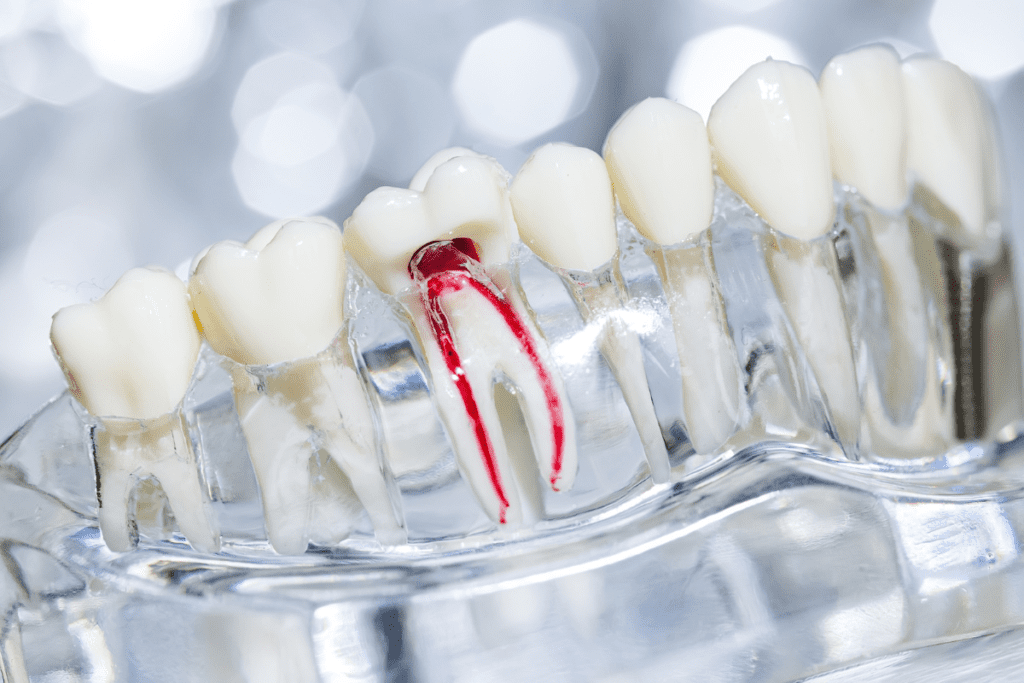
Every tooth has a hard outer ‘shell’ (the bit you can see) and a soft inner core called the pulp. The pulp is where the tooth’s nerve and blood supply live. It’s the part that lets you feel hot or cold foods, and it’s what kept your tooth alive while it was growing.
When bacteria find their way into that inner core they begin to multiply in a space that has no way to clean itself out. The pulp becomes inflamed, then infected. Because the pulp is surrounded by hard tooth on all sides, there’s nowhere for the swelling to go and nothing to wash the bacteria away. That pressure and infection are what cause the symptoms most people recognise as needing urgent dental attention.
Left alone, the infection eventually kills the nerve inside the tooth and spreads outwards through the root, into the bone, and sometimes into the gum – which is where abscesses, gum boils, and facial swelling come from. It’s also why root canal symptoms tend to get worse, not better, over time.
The good news is that this is exactly what a root canal is designed to fix. Root canal treatment removes the infected pulp and sealing the inside of the tooth, and in doing so we stop the problem at its source. The treated tooth, now free of infection, can go on functioning normally for many years to come.
7 Signs of Needing a Root Canal
If you’re worried about a tooth, these are the most common signs that a root canal may be needed:
- Persistent tooth pain
- Lingering sensitivity to hot or cold
- Pain when biting or chewing
- Swollen, tender, or darkened gums
- A pimple or abscess on the gum
- Tooth discolouration, especially a single dark tooth
- A cracked, chipped, or loose tooth
You may have just one of these signs, or several at once. Either way, they’re your tooth’s way of telling you something isn’t right – and the sooner you have it looked at, the more likely we can save it.

1. Persistent or Throbbing Tooth Pain
This is the most common warning sign. Root canal pain is usually deep, throbbing, and hard to ignore – quite different from the brief twinge of a sensitive tooth. It often gets worse when you lie down, which is why so many people notice it most at night. If the pain keeps coming back, or won’t settle with painkillers, the infection is unlikely to clear on its own.
2. Lingering Sensitivity to Hot or Cold
A quick zing when you bite into ice cream is usually nothing to worry about. The red flag is lingering sensitivity – pain that carries on for 30 seconds or more after the hot drink or cold food is gone. That lasting ache is a sign the nerve inside the tooth is inflamed or dying, and it’s one of the clearest indicators that a root canal may be needed.
3. Pain When Biting or Chewing
If one specific tooth hurts every time you bite down, it’s telling you something. Pressure pain often means the infection has spread beyond the tooth itself and into the tissue around the root. You may find yourself unconsciously chewing on the other side of your mouth – a small habit that often points straight to the tooth in question.
4. Swollen, Tender, or Darkened Gums
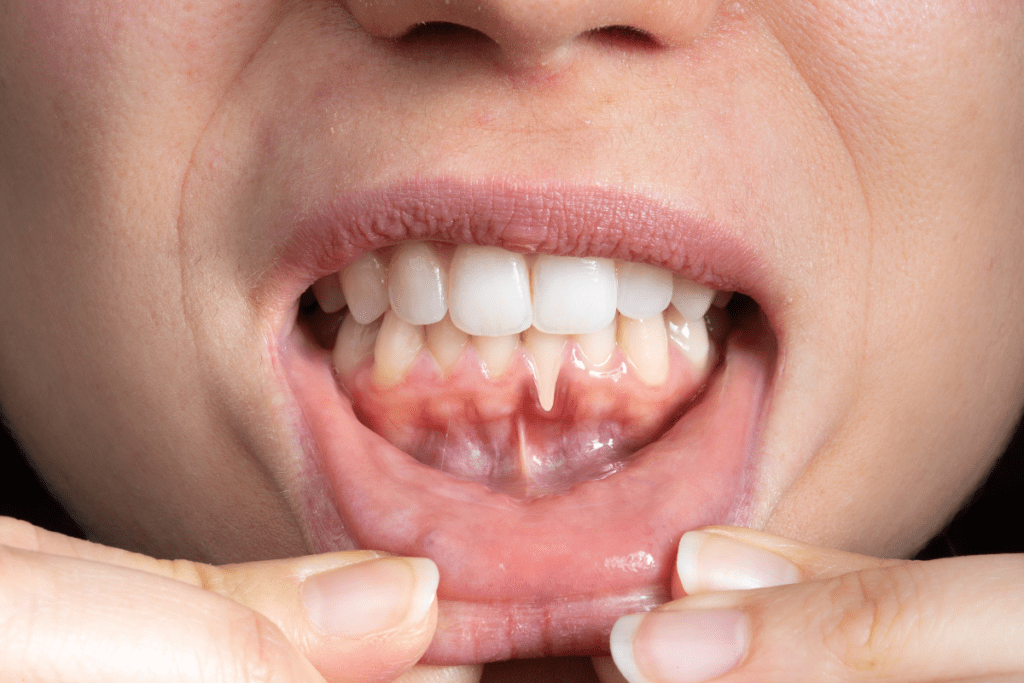
When the gum around one particular tooth feels puffy, sore, or looks darker than the surrounding area, the infection inside the tooth has likely begun to affect the tissue around it. It can be subtle at first (just a slight tenderness when you brush) but it tends to get worse rather than better.
5. A Pimple or Abscess on the Gum
A small white or yellow spot on the gum, sometimes with a strange salty taste in your mouth, is what dentists call a gum boil. It’s the body’s way of trying to drain an infection that has nowhere else to go. This sign always warrants a same-week appointment, even if the pain seems to come and go. You can read more aboutthe stages of a tooth abscess if you’d like to understand what’s happening.
6. Tooth Discolouration (Especially a Single Dark Tooth)
If one tooth has started to look grey, brown, or noticeably darker than the others, the nerve inside is likely dying or already dead. This isn’t the gradual yellowing that comes from coffee, tea, or red wine, it’s a single tooth changing colour from the inside out. It can happen weeks or months after an injury you may have forgotten about, like knocking a tooth in childhood.
7. A Cracked, Chipped, or Loose Tooth
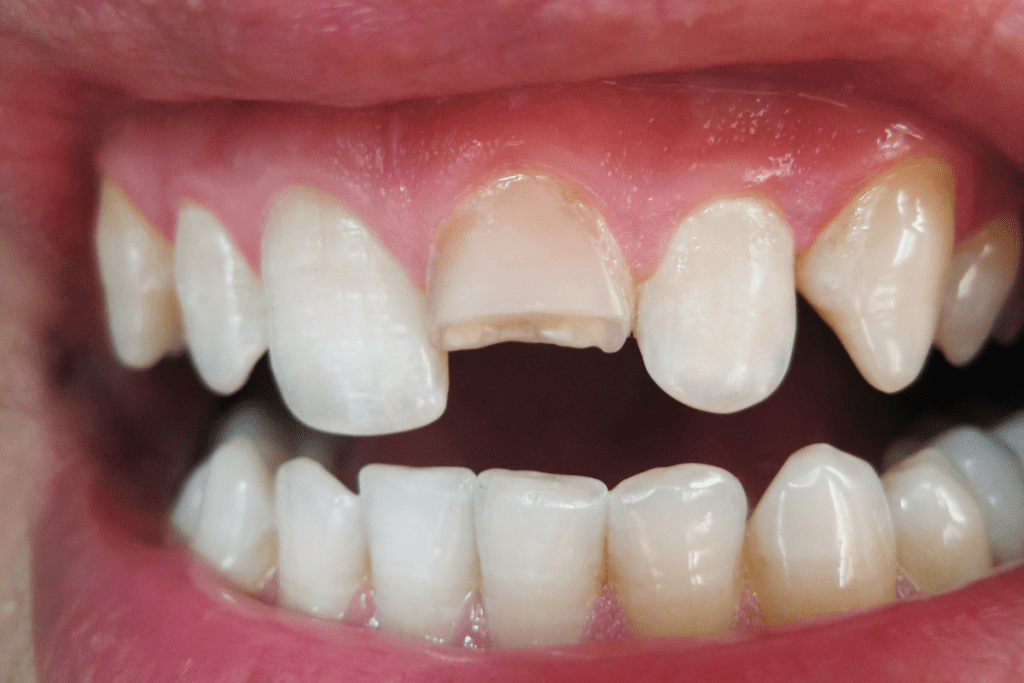
A crack or chip (even a small one) can let bacteria reach the pulp inside, especially if it goes deep. Teeth that have had large fillings, repeated work, or a knock at some point in the past are most at risk. If a tooth suddenly feels slightly loose without any obvious cause, it’s worth getting it checked promptly.
How to Tell If It’s a Root Canal, a Filling, or Just a Toothache
Not every sore tooth needs a root canal. It could just be a twinge that will settle after a few days, or maybe you need a filling to ease the pain.
You can usually get a good sense of how serious things are by paying attention to a few key signals:
When a Filling Is Probably Enough
If your tooth is occasionally sensitive to cold, has a small visible hole or dark spot, or feels a bit rough to your tongue, you may be dealing with early decay. At this stage the infection hasn’t reached the nerve, and a simple tooth filling is usually all that’s needed. The giveaway is that the discomfort tends to be brief, predictable (cold things, sweet things), and doesn’t keep you up at night.
When You’re Likely Looking at a Root Canal
The bigger warning signs are the ones we covered above: persistent throbbing pain, lingering sensitivity that doesn’t fade, pain when biting, a gum boil, or a tooth that’s changed colour. When two or more of these symptoms show up together, the infection has almost certainly reached the pulp, and a filling alone won’t fix it. The good news is that a root canal at this stage can usually save the tooth.
When the Tooth May Be Beyond Saving
If a tooth has been left untreated for a long time, has fractured below the gum line, or has lost most of its structure to decay, it may no longer be possible to save with a root canal. We never want to reach this point, but we’d rather be honest with you than promise something that won’t work. Even in this situation, there are excellent options to replace the tooth – and the earlier you come in, the more choices you have.
What Causes a Tooth to Need a Root Canal?
Root canals don’t happen out of nowhere. There’s almost always a reason the nerve inside the tooth has become infected.
Deep Decay and Untreated Cavities
This is by far the most common cause. A cavity that starts as a small surface hole can, over months or years, work its way deeper through the tooth until it reaches the pulp. Catching decay early at routine check-ups is the simplest way to avoid this. Our guide to how to prevent cavities covers the practical habits that make the biggest difference.
Cracks, Chips, and Dental Trauma
A knock to the mouth, biting down on something hard, or grinding your teeth at night can all create cracks – sometimes so fine you can’t see them. Even tiny fractures give bacteria a pathway to the nerve. Sports injuries, falls, and old childhood accidents are surprisingly common culprits, and the symptoms can show up years after the original injury.
Repeated Dental Work on the Same Tooth
A tooth that’s been filled, refilled, and crowned over many years has been through a lot. Each dental procedure puts a small amount of stress on the pulp, and eventually the nerve can become inflamed or die – even if the most recent dental work was perfectly done. This is why teeth with very large or very old fillings sometimes need a root canal seemingly out of the blue.
Gum Disease That Reaches the Root
In advanced cases, gum disease can cause bone loss and erode the tissue supporting a tooth so badly that bacteria reach the root from underneath. This is less common than decay-related infections, but it’s a reminder that healthy gums protect more than just your gum line – they protect the whole tooth.
How Urgent Is It? When to See a Dentist
Not every dental problem is an emergency, but some genuinely are. Here’s a simple way to work out where your situation sits.
- See a Dentist Within a Week If you’re noticing mild lingering sensitivity, occasional twinges, slight discolouration, or a small spot of tenderness in your gum, book an appointment in the next few days. There’s no need to panic, but these are signs that your oral health needs checking. It’s far easier (and cheaper) to treat now than later.
- Book an Urgent Appointment in the Next 24–48 Hours Persistent throbbing pain, a gum boil that won’t go away, swelling that’s getting worse, or a tooth that hurts every time you bite all mean the infection or damage has progressed and the tooth needs attention quickly. Call us, or book an emergency appointment – we have a 24-hour phone line for exactly this kind of situation.
- Seek Emergency Care Immediately If you have facial swelling that’s spreading towards your eye or down your neck, a fever, difficulty swallowing, or difficulty breathing, this is a medical emergency, not just a dental one. Go straight to A&E or cal NHS 111 for urgent advice. A spreading dental infection is serious and needs to be treated without delay.

What Happens If You Ignore the Signs?
We understand the temptation to wait and see, especially if the pain comes and goes, or if you’re hoping it’ll just settle down. Unfortunately, dental infections don’t work that way.
Left untreated, what starts as a savable tooth becomes a lost tooth. An infection that could be cleared with a root canal becomes an abscess. An abscess that could be drained becomes a spreading infection in the jaw, the face, or (very occasionally) somewhere far more serious. We don’t share this to frighten you; we share it because we see it. Patients almost always wish they’d come in sooner.
The simplest truth is this: the earlier you act, the more options you have, the more comfortable the treatment is, and the more likely we can save your natural tooth.
“But I’m Scared of the Dentist” – A Word for Nervous Patients
If you’ve read this far and you’re feeling anxious, please know that you’re not alone, and you’re not being silly. Dental phobia is one of the most common reasons people delay treatment, and we’d never judge you for it. In fact, here at Pure Dental we specialise in treating anxious and long‑neglected patients. If you haven’t been for years because of fear, there is nothing you could show us that we haven’t seen before.
Modern Root Canals Aren’t What You’re Imagining
Much of what people fear about root canals comes from stories that are decades out of date. With today’s anaesthetics, gentle techniques, and proper numbing, the procedure itself is usually no more uncomfortable than having a filling. Most patients tell us afterwards that the worry beforehand was far worse than the appointment itself.
How Pure Dental Supports Anxious Patients
We’ve built our practice around making nervous patients feel comfortable. We use The Wand™, a pain-free alternative to traditional injections, and we offerdental sedation for patients who need a little more help to relax.
Our team is trained in supporting people with dental phobia, and our practice is designed to feel calm rather than clinical. If you’d like to talk things through before committing to anything, our free treatment advisor consultation is a no-pressure way to meet us first.

What to Expect If You Need Root Canal Treatment
If you do end up needing a root canal, here’s a quick overview of what’s involved so there are no surprises.
How Long Does Root Canal Treatment Take?
Most root canals take between one and two appointments, with each appointment lasting around 60 to 90 minutes. Front teeth are often quicker than back teeth, because they have fewer roots to clean and seal. We’ll always give you a clear timeline before we start.
Will It Hurt?
The honest answer: no, it shouldn’t. The area is fully numbed before we begin. There’s sometimes mild tenderness for a few days afterwards, easily managed with over-the-counter painkillers – but the constant pain that brought you in is usually gone the moment the infection is cleared.
Recovery and Aftercare
You’ll be able to go straight home and back to your day afterwards, though it’s sensible to avoid chewing on the treated side until any numbness wears off. The tooth may feel slightly tender for a few days, particularly when biting, but this settles quickly. Most patients return to completely normal eating and drinking within a week.

Worried You Might Need a Root Canal? We’re Here to Help
If anything in this article rings true for what you’re feeling right now, please don’t sit on it. Tooth pain rarely improves on its own – it’s almost always easier to treat than people fear, and the relief afterwards is enormous.
At Pure Dental, we’ll always start by listening. We’ll take a proper look, explain what’s going on in plain language, and walk you through your options without any pressure.
Whether you end up needing a root canal, a simple filling, or just some reassurance that everything’s fine, we’ll help you make the right call for your tooth and your peace of mind.
Book a dentist appointment — we’re ready when you are.
Book a free, no-pressure treatment advisor consultation – if you’d like to meet us and ask a few questions before committing to anything.
We’re based in Truro and welcome patients from across Cornwall. You can reach us 24 hours a day on 01872 222 404 – there’s always someone here to help.

Frequently Asked Questions
What symptoms indicate you need a root canal?
The most common signs are persistent or throbbing tooth pain, lingering sensitivity to hot or cold (especially pain that lasts more than 30 seconds after the temperature is gone), pain when biting or chewing, swollen or tender gums around one tooth, a pimple or abscess on the gum, a single tooth that has darkened in colour, or a cracked or chipped tooth. You may have just one of these signs or several at once – either way, it’s worth getting checked.
When is it too late for a root canal?
It’s usually too late for a root canal when the tooth has fractured below the gum line, has lost most of its structure to decay, or has been left untreated for so long that there isn’t enough healthy tooth left to save. The earlier you come in, the more options you have. Even if a root canal isn’t possible, there are excellent replacement options – but acting sooner almost always means saving the natural tooth.
What is the first stage of a root canal?
The first stage is diagnosis. Your dentist will examine the tooth, take X-rays to see what’s happening inside, and confirm whether the pulp is infected. Once that’s clear and you’re happy to go ahead, the area is fully numbed with local anaesthetic before any treatment begins. The actual procedure starts with creating a small opening in the top of the tooth to access the infected pulp inside.
Can a root canal heal on its own?
No. Once the pulp inside a tooth becomes infected, it cannot heal by itself – there’s no blood supply reaching that area to clear the infection naturally. The pain may come and go, which can fool people into thinking the problem has passed, but the infection continues to spread underneath. Without treatment, it will eventually lead to an abscess and tooth loss. A root canal is how we stop the problem at its source.
How much does a root canal cost in the UK?
NHS root canal treatment is currently a Band 2 charge (£75.30 in England as of 2025), or Band 3 if a crown is needed straight after. Private root canal treatment varies depending on the tooth involved (front teeth are usually less complex than back teeth) and can range from around £400 to £1,200 or more. You can see our full pricing on our dental fees page, and our membership plan helps spread the cost of ongoing care.
Is it better to have a root canal or have the tooth removed?
In almost every case, saving your natural tooth with a root canal is the better option. Natural teeth function better, look better, and don’t require a replacement. Removing a tooth is quicker and sometimes cheaper in the short term, but you’ll usually need a bridge, implant, or denture afterwards – which costs more overall and involves further treatment. A root canal lets you keep your own tooth, often for the rest of your life.
How can I avoid needing a root canal in future?
The best protection is consistent prevention – brushing twice a day with fluoride toothpaste, flossing or using interdental brushes daily, and attending regular dental check-ups so any decay can be caught early. Wearing a mouthguard for sports, avoiding using your teeth to open things, and not ignoring small twinges all help too. Our guide to how to prevent cavities covers the practical habits in more detail.