What is Crown Lengthening?
Crown lengthening is a periodontal surgical procedure that removes excess gum tissue (and sometimes bone) to expose more of your tooth’s surface. It’s a common, minimally invasive procedure that allows your dentist to access more of your tooth structure for treatment or aesthetic improvement.
During a crown lengthening procedure, your dentist gently reshapes the gum line, creating better proportions between your tooth and gum tissue. The procedure typically takes 30-90 minutes, depending on how many teeth are involved and the extent of tissue removal needed. Most patients experience minimal discomfort during the procedure because the area is numbed with local anaesthesia, though you may feel pressure or vibration.
Why Would You Need Crown Lengthening?
Crown lengthening serves several important purposes in dentistry. Your dentist may recommend it for functional, health, or cosmetic reasons, and understanding why you need it helps you appreciate the benefits you’ll gain.
Tooth Structure and Aesthetic Concerns
If your teeth appear too short or your gumline looks uneven, crown lengthening can transform your smile. Some people have a naturally high gumline that makes teeth look stubby or creates an unbalanced smile.
Crown lengthening exposes more tooth surface, making teeth look longer, more proportional, and more attractive. This is particularly helpful before cosmetic treatments like veneers or crowns, as it ensures better aesthetics and longevity of your restoration.
Gum Disease and Periodontal Health
Deep pockets between your tooth and gum tissue can harbour bacteria and lead to gum disease. Crown lengthening reduces these pockets, making it easier to clean and maintain your teeth. By removing diseased tissue and exposing healthier tooth structure, the procedure helps prevent future gum disease and tooth loss. It’s a preventative measure that protects your long-term oral health.
Preparation for Cosmetic or Restorative Dental Work
If you’re planning a crown, bridge, or veneer, your dentist may recommend crown lengthening first. This exposes enough tooth structure for the restoration to be properly supported and to extend slightly below the gumline for better longevity.
Who is a Good Candidate for Crown Lengthening?
Crown lengthening is suitable for most people with healthy gums and bone structure.
During your consultation at Pure Dental, your dentist will assess whether crown lengthening is appropriate for you. They’ll examine your gum tissue, bone level, and tooth structure to determine if the procedure will achieve your goals safely. If you have severe bone loss, active gum disease, or other health concerns, alternative treatments may be recommended instead.
The Crown Lengthening Procedure: What to Expect
Understanding the steps involved helps reduce dental anxiety and sets realistic expectations for your procedure.
Before Your Procedure
Schedule a consultation with your dentist to discuss your goals and whether crown lengthening is right for you. X-rays may be taken to assess your bone structure, and your dentist will explain the procedure, potential risks, and aftercare in detail.
Avoid taking aspirin or blood thinners for a few days before surgery (discuss this with your dentist), maintain excellent oral hygiene leading up to your appointment, and arrange for someone to drive you home afterwards, as you may feel drowsy from anaesthesia.
During the Crown Lengthening Procedure
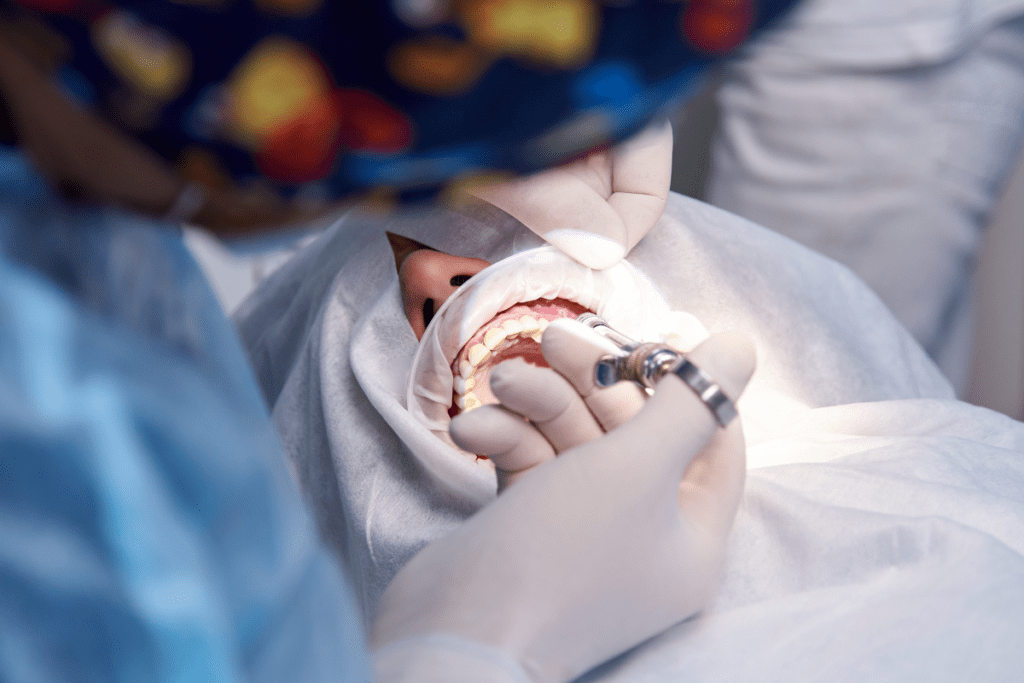
When you arrive, your dentist will apply local anaesthesia to numb the area so you won’t feel any pain. Once you’re numb, your dentist gently separates the gum tissue from the tooth using specialised instruments. Depending on your needs, they may remove excess gum tissue, sculpt the gumline for better proportions, and sometimes remove a small amount of bone to achieve the desired result. The area is thoroughly cleaned and irrigated throughout the procedure.
Your dentist will then contour the tissue to create a natural-looking, even gumline. If sutures are needed to hold the tissue in place while it heals, they’ll be placed before you leave. The procedure is painless, though you may feel pressure, hear water irrigation, or notice vibration – all normal sensations.
How Long Does Crown Lengthening Take?
A single tooth typically takes 30-45 minutes, while multiple teeth may take 60-90 minutes, depending on complexity. Your dentist will give you a specific timeframe during your consultation.
Crown Lengthening Recovery: Post-Operative Care Guide
Proper aftercare is essential for optimal healing and results. Here’s what to expect and how to care for your surgical site (open PDF for post-operation care guide!).
First 24 Hours After Crown Lengthening
Rest is crucial on the day of your procedure. Avoid strenuous activity, heavy lifting, and vigorous exercise – the more activity you do, the more swelling and discomfort you may experience.
You may have some bleeding, which is completely normal; use gauze to apply gentle pressure if needed. Sleep semi-reclined with at least two pillows to minimise swelling, and place a towel over your bedsheets in case of any bleeding during the night.
Sutures and Removal
Your dentist will either place dissolvable sutures that dissolve on their own within 4-6 days, or silk sutures that require removal at your follow-up appointment (usually 5-7 days after surgery). Don’t attempt to remove sutures yourself – your dentist will do this painlessly during your post-op visit. Dissolvable sutures feel strange as they come out, but this is normal and temporary.
Oral Hygiene After Crown Lengthening
The surgical area will be tender for several days, but keeping it clean is essential for healing. Do not brush the area for the first 24 hours. After 24 hours, gently brush just the tops and sides of the treated teeth, being very careful not to touch the gum tissue.
Rinse the area 3-4 times daily with lukewarm salt water (mix ½ teaspoon salt in 8 ounces warm water) or a prescribed mouthwash. Use a soft-bristled toothbrush and avoid the surgical site until your dentist clears you to resume normal brushing.
Pain Management and Medication
Your dentist will prescribe pain medication appropriate for your procedure and health history. Take it as directed, and don’t wait until pain is severe – managing pain early is more effective.
If antibiotics are prescribed, complete the entire course even if you feel better; this ensures proper healing and prevents infection. Read all medication instructions carefully. Contact Pure Dental immediately if you experience nausea, allergic reactions, or unusual symptoms.
Diet and Nutrition During Recovery
Proper nutrition supports healing. For the first 4-6 days, stick to clear liquids (preferably room temperature) and soft foods like yoghurt, smoothies, soup, mashed potatoes, and scrambled eggs. Avoid very hot foods and drinks as they can increase bleeding.
After the first week, introduce a high-protein diet with soft foods like fish, beans, and cooked vegetables. Avoid hard, crunchy, sticky, or spicy foods for at least two weeks, as these can irritate the surgical site.
Stay well-hydrated throughout recovery – water is essential for healing. Avoid alcohol and smoking, both of which impair healing.
Activity Restrictions and Rest
Limit activities on the day of your procedure. For the first week, avoid strenuous exercise, heavy lifting, and activities that elevate your heart rate, as increased blood flow can cause bleeding and swelling. You can gradually resume normal activities after 7-10 days, but avoid contact sports and vigorous exercise for at least two weeks.
Listen to your body – if activity causes discomfort or bleeding, rest more.
Managing Swelling After Crown Lengthening Surgery
Swelling is a normal part of healing and typically peaks on days 2-3 before gradually improving. To minimise swelling, use ice packs properly: for the first 72 hours, apply ice for 10 minutes once per hour. After 72 hours, use ice for 15-20 minutes, three times daily (morning, late afternoon, and before bed). Always place a cloth between your skin and the ice pack, and never fall asleep with ice on your skin.
Bruising and What’s Normal
Some patients, particularly those taking aspirin or blood thinners, may experience bruising. You may notice a bruise on your cheek or face 3-5 days after surgery; this is completely normal. Bruising typically fades within 7-10 days. If bruising is severe or doesn’t improve, contact your dentist.
Using Ice Packs Effectively
Apply ice packs to the affected area at least 3 times daily for as long as you have pain, swelling, or inflammation.
- For the first 72 hours, ice for 10 minutes once per hour.
- After 72 hours, use 15-20 minute sessions three times daily: morning, late afternoon, and about 30 minutes before bed.
- Also, ice after any prolonged activity or vigorous exercise.
Always keep a cloth between your skin and the ice pack, press firmly against all curves of the affected area, and never apply ice for longer than 20 minutes at a time. Be especially careful around the eye area to prevent chemical burns if a pack leaks.
Follow-Up Appointments and Healing Timeline
What to Expect at Your Post-Op Visit
Your dentist will see you 5-7 days after your procedure to review your healing, check for any complications, and remove sutures if necessary (if you had non-dissolvable sutures). This visit is quick and painless. Your dentist will examine the surgical site, ensure it’s healing properly, and give you any additional aftercare instructions based on your individual healing.
How Long Does Crown Lengthening Take to Heal?
Initial healing takes 2-3 weeks, during which the surgical site closes and swelling subsides. However, complete bone remodelling can take 4-6 months.
During this time, the gums settle into their new position, and the bone adapts to the new contours. Your dentist may wait 4-6 weeks before placing a crown or other restoration to allow full healing. Most patients return to normal activities within 7-10 days, though complete healing is gradual.
Frequently Asked Questions About Crown Lengthening
Is Crown Lengthening Painful?
No. The area is numbed with local anaesthesia before the procedure, so you won’t feel pain – only pressure and vibration. After surgery, mild discomfort is normal and managed with prescribed pain medication. Most patients rate the procedure as less uncomfortable than having a tooth filling done.
How Much Does Crown Lengthening Cost?
Cost depends on the number of teeth treated and the complexity of your case. A single tooth typically costs £300-£800, while multiple teeth may cost more. During your consultation at Pure Dental, we’ll provide a clear quote and discuss the dental finance options available to you.
Can Crown Lengthening Be Done on Multiple Teeth?
Yes, crown lengthening can be performed on one tooth or several teeth at once. Your dentist will discuss the best approach based on your goals and mouth anatomy. Multiple teeth can be treated in a single appointment.
What Are the Risks of Crown Lengthening?
Crown lengthening is a safe, routine procedure with minimal risks. Potential complications are rare but may include infection, excessive bleeding, or temporary tooth sensitivity. Your dentist takes precautions to prevent these, and you can minimise risk by following the crown lengthening aftercare instructions carefully.
When Can I Return to Normal Activities?
You can return to light activities after 2-3 days and resume normal activities (excluding vigorous exercise) after 7-10 days. Contact sports and intense exercise should be avoided for 2-3 weeks. Listen to your body and avoid activities that cause discomfort or bleeding.
Will Crown Lengthening Affect My Bite?
Crown lengthening removes gum tissue, not tooth structure, so it doesn’t directly affect your bite. However, if bone is removed during the procedure, your bite may feel slightly different initially. This normalises as you adjust, and your dentist will monitor your bite during follow-up visits.
How Painful is a Crown Lengthening Procedure?
Crown lengthening is not painful. Your dentist numbs the area with local anaesthesia before starting, so you won’t feel pain – only pressure, vibration, and water irrigation. After surgery, mild discomfort is normal and easily managed with prescribed pain medication. Most patients find the procedure less uncomfortable than having a filling.
What Are the Risks of Crown Lengthening Surgery?
Crown lengthening is a safe, routine procedure with minimal risks when performed by an experienced dentist. Rare potential complications include infection, excessive bleeding, or temporary tooth sensitivity. Your dentist takes precautions to prevent these, and following aftercare instructions carefully significantly reduces any risk. Most patients experience no complications at all.
Is Crown Lengthening Surgery Worth It?
Yes, for the right candidates. If you’re unhappy with your smile due to a gummy appearance, preparing for cosmetic work such as veneers or crowns, or managing gum disease, crown lengthening can deliver lasting improvements. The procedure is minimally invasive, has high success rates, and offers benefits that are well worth the short recovery period.
How Much is Crown Lengthening in the UK?
Crown lengthening costs vary depending on the number of teeth and the complexity of your case. A single tooth typically costs £300-£800, while multiple teeth may cost more. At Pure Dental, we provide a clear, personalised quote during your consultation and offer financing options to make treatment affordable. Contact us for a free treatment advisor consultation to discuss your specific needs and pricing.
When to Contact Your Dentist
Contact Pure Dental immediately if you experience continuous pain not controlled by prescribed medication, excessive bleeding that doesn’t stop with gentle pressure, signs of infection (fever, pus, increasing swelling after day 3), allergic reactions to medication, or any other unusual symptoms. Whilst these are unlikely, we’re here to support your recovery and ensure the best possible outcome.
Call us on 01872 222404 any time with questions or concerns.