Wisdom teeth soreness is one of those experiences that can stop you in your tracks – a dull ache at the back of your jaw, a nagging tenderness, or a throbbing that won’t let up. If you have wisdom tooth pain, you’re probably wondering whether what you’re feeling is normal, whether it will pass on its own, or whether it’s time to do something about it.
You’re in the right place. At Pure Dental in Truro, we understand that discomfort around your wisdom teeth can feel unsettling – especially if you’re not sure what’s causing it or what comes next. This guide will walk you through everything you need to know, clearly and honestly, so you can make the decision that’s right for you.
What Is Wisdom Teeth Soreness (And Is It Normal?)
Wisdom teeth soreness is the pain or discomfort caused by your third molars as they push through the gum at the back of your mouth. It can feel like a dull ache or pressure in your jaw – and yes, for most people, some degree of wisdom tooth soreness is completely normal. It’s your mouth responding to a natural process, and in many cases, it will ease on its own.
When Do Wisdom Teeth Usually Come Through?
Wisdom teeth typically emerge between the ages of 17 and 25, though it’s not unusual for them to appear later, sometimes well into your thirties. Most adults have four wisdom teeth in total, one in each corner of the mouth, but some people have fewer, and a small number never develop them at all. There’s no set timeline, which means the tenderness can catch you off guard even if you thought you’d missed the wisdom teeth window entirely.
Why Do Wisdom Teeth Cause More Discomfort Than Other Teeth?
Unlike your other adult teeth (which come through during childhood when the jaw is still growing), wisdom teeth arrive when your mouth is already fully developed.
There’s often very little room for them to work with. As they push upward through the gum tissue, that pressure (against existing teeth, against bone, against soft tissue) is what creates the soreness.
When there’s enough space and the tooth is growing straight, discomfort tends to be mild and temporary. When there isn’t enough room or the tooth is growing at an angle, the pain of wisdom teeth coming through.
Common Symptoms of Wisdom Teeth Soreness
Wisdom teeth soreness doesn’t look the same for everyone. Some people experience a mild, manageable ache that comes and goes over a few weeks. Others find the discomfort more intense or notice it spreading beyond the back of the mouth.
Here are the most common symptoms to be aware of:
- Pain or aching at the back of the mouth, often felt along the lower jaw where the wisdom teeth are working their way through
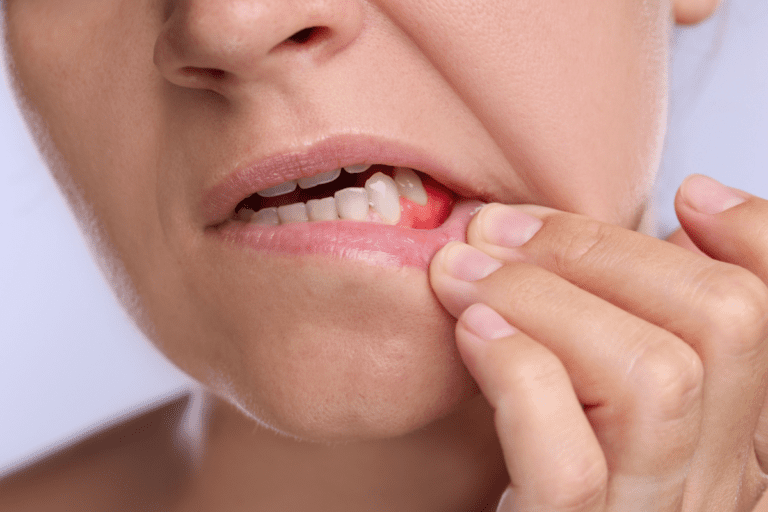
- Sore, tender gums around the area where the tooth is emerging, which may look slightly red or swollen
- Pressure or a feeling of fullness in the jaw, as though something is pushing against your existing teeth
- Difficulty chewing or biting down comfortably, particularly on the side where the wisdom tooth is coming through
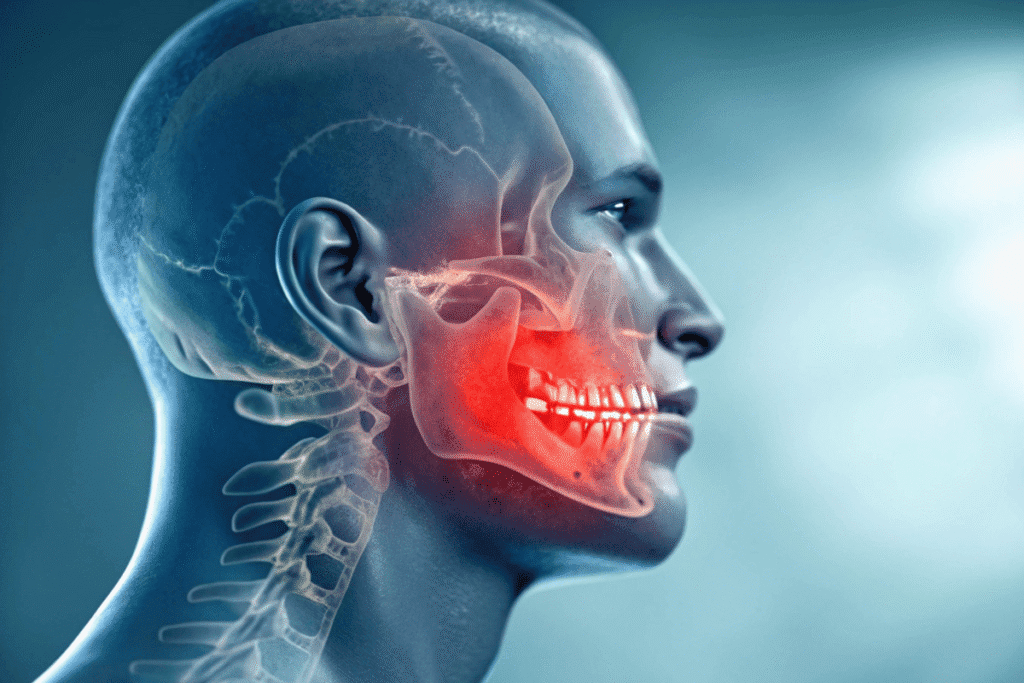
- Jaw stiffness, making it feel harder than usual to open your mouth fully
- Mild headaches or earache, which can radiate from the jaw as a result of the pressure building around the emerging tooth
- Bad breath or an unpleasant taste, caused by bacteria becoming trapped in the gum tissue around a partially emerged tooth
- Swelling around the jaw or cheek, which tends to be more noticeable if the gum has become irritated or infected
If you’re recognising several of these symptoms together, your wisdom teeth are very likely the cause – even if the discomfort seems to be coming from somewhere else entirely.
Soreness That Comes and Goes – What Does It Mean?
If your wisdom teeth soreness seems to flare up and then disappear for days or weeks at a time, you’re not imagining it. This on-and-off pattern is very common and usually reflects the stop-start nature of the wisdom tooth eruption process.
While intermittent soreness on its own isn’t usually a cause for concern, it’s worth paying attention to whether the flare-ups are becoming more frequent, more intense, or accompanied by swelling or a bad taste, as these can be signs that something more is going on.
Are Jaw Stiffness and Headaches Connected to Wisdom Teeth?
It might seem surprising that a tooth at the back of your mouth could be responsible for a headache or an aching jaw, but the connection is well established.
The pressure created by an emerging or impacted wisdom tooth places strain on the surrounding muscles, joints and nerves, and that tension can radiate outward. Jaw stiffness (sometimes called trismus) is particularly common when the gum tissue around the wisdom tooth becomes inflamed. Headaches and earache are also frequently reported, as the nerves in the jaw share pathways with those in the ear and temple area.
If you’ve been putting unexplained headaches or facial tension down to stress, it may be worth considering whether your wisdom teeth are actually the source.
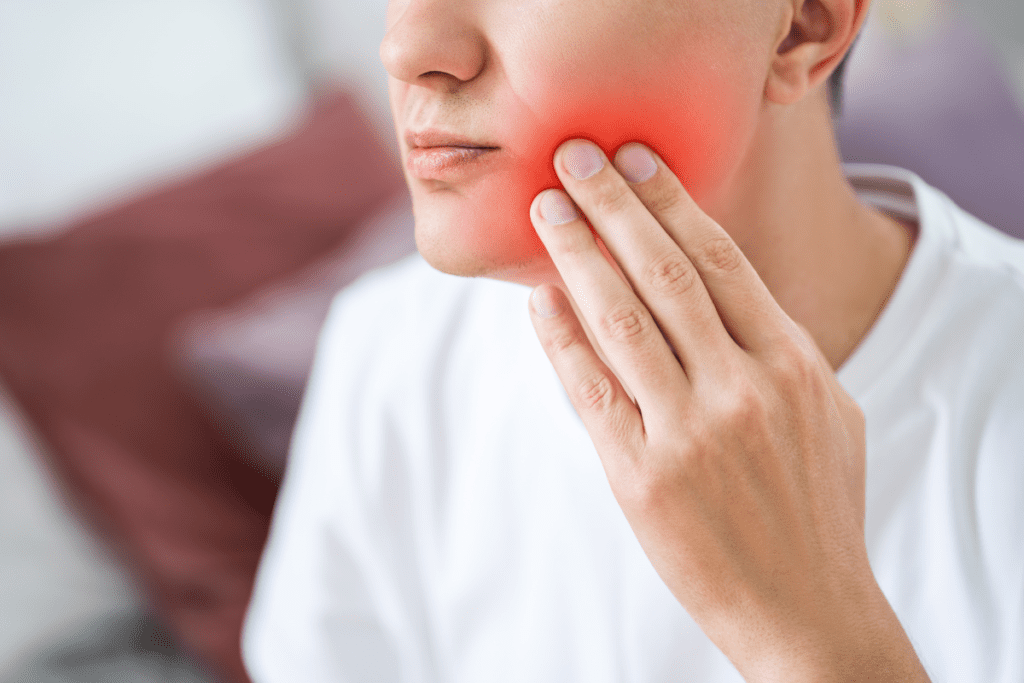
How Long Does Wisdom Teeth Soreness Last?
The honest answer is that it depends on what’s causing the discomfort. If your wisdom teeth are coming through at a reasonable angle and there’s adequate space in your jaw, the soreness is often intermittent and tends to resolve within a few days to a couple of weeks as each stage of eruption settles down.
If the soreness persists beyond a few weeks without any sign of easing, is getting progressively worse, or is interfering with eating, sleeping, or daily life, that’s your mouth telling you it needs some attention.
The key point to remember is that waiting and hoping is rarely the most helpful approach. Getting checked early means any developing issue can be caught before it becomes more complicated. A conversation with one of our team at our dental practice in Truro will give you the reassurance you need far sooner than you’d expect.
Warning Signs – When Wisdom Teeth Soreness Needs Professional Attention
Wisdom teeth soreness is common, and it’s often just a natural part of the eruption process. But there are certain signs that tell you this is no longer something to manage at home and that it’s time to speak to a dentist.
Signs of an Impacted Wisdom Tooth
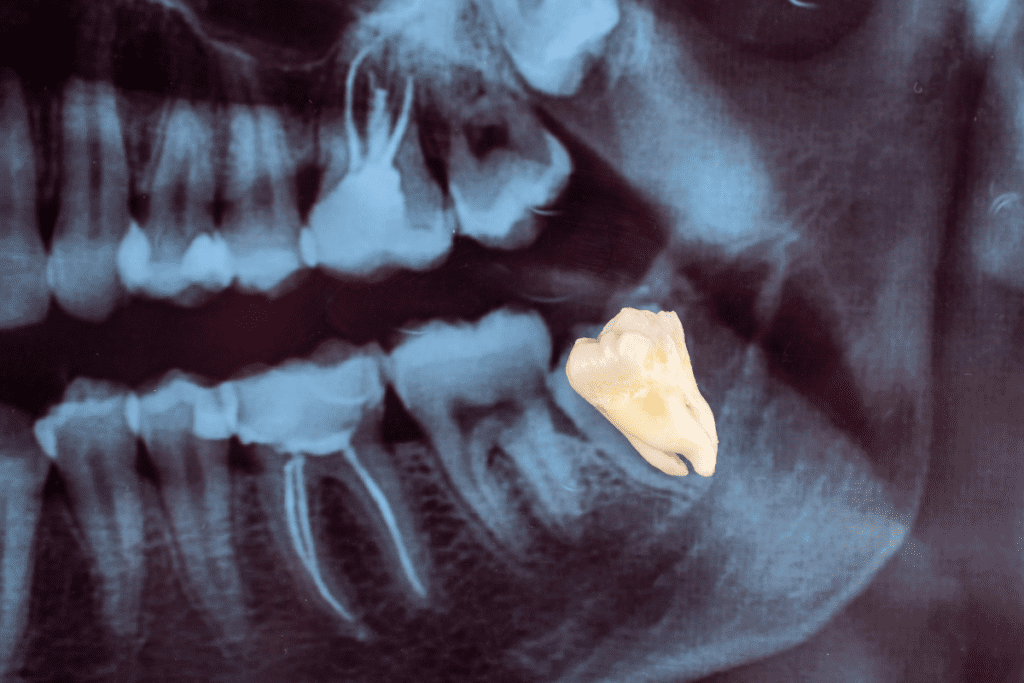
An impacted wisdom tooth is one that doesn’t have enough room to emerge properly — either because the jaw is too small, or because the tooth is growing at an angle that brings it up against the tooth in front.
Impaction is more common than many people realise, and it can range from mildly problematic to significantly painful, depending on the position of the tooth and the pressure it’s placing on surrounding structures.
Signs that a wisdom tooth may be impacted include:
- Persistent, deep pain at the back of the jaw that doesn’t ease with over-the-counter pain relief
- A feeling of pressure or crowding that seems to be shifting your other teeth
- Swelling or tenderness concentrated around one specific area of the gum
- Difficulty opening your mouth fully, or discomfort when biting down
- A tooth that has only partially emerged and appears to be stuck
If any of these sound familiar, it’s worth getting an X-ray to understand exactly what’s happening beneath the surface. Here at Pure Dental in Truro, we can assess the position of your wisdom teeth and clearly talk you through your options, helping you understand what (if anything) needs to happen next.
Signs of Infection Around a Wisdom Tooth
A partially erupted wisdom tooth creates a small pocket between the tooth and the overlying gum, and that pocket is unfortunately very good at trapping food and bacteria.
When this happens, an infection called pericoronitis can develop, and it’s one of the most common complications associated with wisdom teeth. Left untreated, the infection can spread and become significantly more serious, so it’s important to recognise the signs early.
Symptoms of wisdom tooth infection include:
- Pain that is worsening and spreading toward the ear, throat or neck
- Visible swelling of the gum, cheek or jaw
- Redness and heat around the affected area
- A bad taste in the mouth or unpleasant smell that doesn’t clear with brushing
- Difficulty swallowing or opening your mouth
- Feeling generally unwell, or running a temperature
If you’re experiencing any combination of these symptoms – particularly swelling alongside a fever or difficulty swallowing – please don’t wait for your next routine appointment. This is the kind of situation where same-day care makes a real difference.
Our emergency dental team in Truro is here for exactly these moments, with same-day appointments available and a 24-hour phone line so you can always reach someone when you need to.

When to Call a Dentist – And What to Expect When You Do
A good rule of thumb is this: if your wisdom teeth soreness is making you anxious, disrupting your sleep, or you simply can’t tell whether what you’re experiencing is normal, call us.
When you contact Pure Dental about wisdom teeth soreness, our team will listen to what you’re experiencing, ask a few gentle questions, and help determine the right next step for you.
In many cases, that first step is a free consultation with one of our treatment advisors – a relaxed, no-pressure conversation that gives us the chance to understand your situation and you the chance to ask everything that’s been on your mind.
If a clinical assessment is needed, we’ll carry out a thorough examination and, where appropriate, take X-rays to see exactly what your wisdom teeth are doing beneath the surface. From there, we’ll explain your options honestly – whether that’s a period of monitoring, treatment to manage an infection, or a conversation about extraction. Nothing happens without your full understanding and agreement, and we’ll take the time to make sure you feel completely comfortable with whatever comes next.
If extraction is required, we may also place L-PRF into the socket site. This helps to stimulate healing and can reduce swelling and soreness after the procedure. The process involves taking a small sample of your blood and placing it in a centrifuge, which separates out your body’s natural growth factors. When these are placed into the socket, they can help support tissue regeneration and reduce post-operative symptoms.
If the idea of coming in feels daunting, you’re far from alone. We work with nervous and anxious patients every single day, and we take great pride in creating a calm, supportive experience. We also offer sedation to ensure you feel comfortable during any procedures if necessary. You can read more about how we help nervous patients feel at ease on our dental phobia page, or explore our dental sedation options if you feel you’d benefit from additional support during treatment.
How to Ease Wisdom Teeth Soreness at Home
While home remedies won’t solve the underlying cause of wisdom teeth soreness, they can make a real difference to your comfort while you’re waiting for things to settle – or while you’re waiting to be seen.
Over-the-Counter Pain Relief – What Works Best?
Over-the-counter remedies can take the edge off, but if you find yourself relying on pain relief regularly just to get through the day, that’s a sign it’s time to get checked by a dentist.
- Ibuprofen is generally the most effective option for wisdom tooth soreness, as it addresses both pain and the inflammation that causes it.
- Paracetamol is a good alternative if you can’t take ibuprofen, and the two can be alternated for more persistent discomfort. Always follow the dosage instructions on the packet, and if you’re unsure what’s appropriate for you, the NHS guidance on ibuprofen for adults is a helpful starting point.
Salt Water Rinses and Cold Compresses
A warm saltwater rinse is one of the simplest and most effective ways to soothe sore gums and reduce the risk of bacterial buildup around a partially erupted tooth.
Dissolve half a teaspoon of table salt in a cup of warm water and rinse gently for around 30 seconds, two to three times a day – particularly after eating.
For swelling or external jaw discomfort, a cold compress wrapped in a cloth and held against the cheek for 15 minutes at a time can help bring down inflammation and provide some numbing relief.
Foods to Avoid When Your Wisdom Teeth Are Sore
Soft, easy-to-chew foods are your best friend when wisdom teeth soreness flares up. Soups, yoghurt, mashed potato, scrambled eggs and smoothies all put minimal pressure on the affected area. Try to chew on the opposite side of your mouth where possible, and avoid anything that requires significant biting force.
Hard, crunchy or chewy foods such as crusty bread, nuts, raw vegetables and tough meat can aggravate the gum tissue and make soreness significantly worse. It’s also worth avoiding very hot drinks, which can increase inflammation, and alcohol, which can interfere with pain relief and slow down healing.

What Will a Dentist Do About Wisdom Teeth Soreness?
The most important thing a dentist can do is take the guesswork away. Rather than wondering what’s causing your discomfort or how serious it might be, a proper assessment gives you a clear picture, and from there, a clear plan.
Do Wisdom Teeth Always Need to Be Removed?
No, and this is one of the most common misconceptions about wisdom teeth. Many people assume that soreness automatically means extraction, but that’s far from the case.
According to NICE guidance, wisdom teeth should be removed only when there is clinical evidence that removal is necessary. If your wisdom teeth are erupting at a healthy angle with sufficient space, the soreness may simply resolve on its own as the tooth settles.
Monitoring, improved oral hygiene around the area, or treatment for a localised infection are all very common outcomes. Extraction is one option, but not the default one.
What Does a Wisdom Teeth Assessment Involve at Pure Dental?
A wisdom teeth assessment at Pure Dental is straightforward and nothing to worry about. One of our experienced dentists will examine the back of your mouth, discuss your symptoms, and, if needed, take X-rays to see exactly how your wisdom teeth are positioned beneath the gums.
From there, we’ll explain clearly what we’ve found and your options. There are no surprises, no pressure, and no decisions made without your full understanding.
We also provide pre-operative and post-operative medication to help manage any soreness and support your recovery.
If you’re a new patient, our free treatment advisor consultation is a great first step – a relaxed, no-obligation conversation that lets us get to know you and your concerns before anything else. You can book yours here.
Nervous About Coming In? Here’s How We Make It Easier
We know that dental anxiety is real, and that wisdom teeth soreness can make the prospect of coming in feel even more daunting. At Pure Dental, we care for nervous patients and are deeply committed to addressing anxiety about visiting the dentist. We take things at your pace, explain everything before we do it, and never rush.
For patients who need a little more support, we’re proud to be the only dental clinic in Cornwall to offer sedation under the supervision of a consultant anaesthetist. Whether your nerves are mild or more significant, we have something that can help. Find out more on our dental phobia page or explore our sedation options.

Ready to Stop Worrying and Get Some Answers?
Wisdom teeth soreness has a way of sitting in the back of your mind – sometimes literally. Whether you’re in the middle of a flare-up right now or you’ve been putting off getting checked for longer than you’d like to admit, the best thing you can do is simply reach out.
A free consultation with our team at Pure Dental in Truro is exactly that – a friendly, honest chat about what you’ve been experiencing, what might be causing it, and what (if anything) needs to happen next. More often than not, that conversation alone is enough to give you the clarity and reassurance you’ve been looking for.
We warmly welcome new patients, and we’re here six days a week, with a 24-hour phone line for those moments when discomfort simply can’t wait. Book your free consultation today – or if you’d prefer to talk to someone first, get in touch with our team and we’ll take it from there.
FAQs about Wisdom Teeth Soreness
What should I do when a wisdom tooth hurts?
Start with over-the-counter pain relief such as ibuprofen or paracetamol, a warm salt water rinse, and soft foods to reduce pressure on the area. If the pain is severe, worsening, or accompanied by swelling or fever, don’t wait — contact us on our 24-hour line or book an emergency appointment. For anything that feels manageable but persistent, a check-up is always a sensible next step.
How long do wisdom teeth hurt?
Straightforward eruption soreness typically eases within a few days to two weeks as each stage of the process settles. However, because wisdom teeth can take months to fully emerge, discomfort may come and go over a longer period. If your pain is lasting more than a couple of weeks without improvement, or is getting progressively worse, it’s worth getting it looked at rather than waiting it out.
Do unerupted wisdom teeth need to be removed?
Not necessarily. According to NICE guidance, wisdom teeth that are free from disease and not causing problems should not routinely be removed. Many unerupted wisdom teeth sit quietly beneath the gum for years without causing any difficulty and simply need to be monitored at regular check-ups. If yours are causing pain, showing signs of infection or affecting neighbouring teeth, that’s when removal becomes a conversation worth having.
Can a wisdom tooth infection heal on its own?
Unfortunately not reliably, and it’s not something we’d recommend leaving to chance. A wisdom tooth infection may ease temporarily but is unlikely to resolve fully without treatment. Left untreated, the infection can spread and become significantly more serious. If you suspect an infection, please contact us promptly. A course of antibiotics and professional cleaning of the area is usually all that’s needed when it’s caught early.
Can wisdom teeth cause ear pain?
Yes, and it’s more common than people expect. The nerves running through the jaw share pathways with those around the ear, meaning pressure or inflammation from an emerging or impacted wisdom tooth can radiate outward and feel very much like earache. If you’re experiencing ear pain alongside jaw discomfort or tenderness at the back of your mouth, wisdom teeth are a likely culprit and worth ruling out with a quick assessment.
Can wisdom teeth cause a sore throat?
They can. When a wisdom tooth becomes infected or significantly inflamed, the surrounding tissue can swell in a way that affects swallowing and creates soreness extending toward the throat. If your sore throat is accompanied by wisdom tooth pain, swelling or difficulty opening your mouth fully, it’s important to be seen promptly — these symptoms together can indicate an infection that needs professional attention rather than simply waiting for it to pass.
Is it okay to leave wisdom teeth alone if they’re not too painful?
Often, yes – provided they’re being monitored. Wisdom teeth that are erupting cleanly, not pressing against neighbouring teeth, and not creating pockets where bacteria can collect may never need any intervention at all. The important thing is that your dentist has a clear picture of what’s happening, which is why regular check-ups matter. What feels manageable on the surface isn’t always the full story, and an X-ray can reveal things that discomfort alone can’t.
Can wisdom teeth affect my other teeth?
Yes, particularly when they’re impacted or growing at an angle. A wisdom tooth pushing against the molar in front can cause pressure, discomfort and — over time — damage to the root or alignment of neighbouring teeth. In some cases this can lead to crowding that affects your bite more broadly. Catching this early through regular monitoring means any impact on your other teeth can be addressed before it becomes a more significant issue.