Are dental implants painful? Less than most people expect. The surgery itself is done under local anaesthetic, so you should feel pressure and movement but no pain. Afterwards, most patients describe mild soreness that peaks about six hours in and settles within three to five days, managed with ordinary painkillers.
The short answer: less painful than most people expect
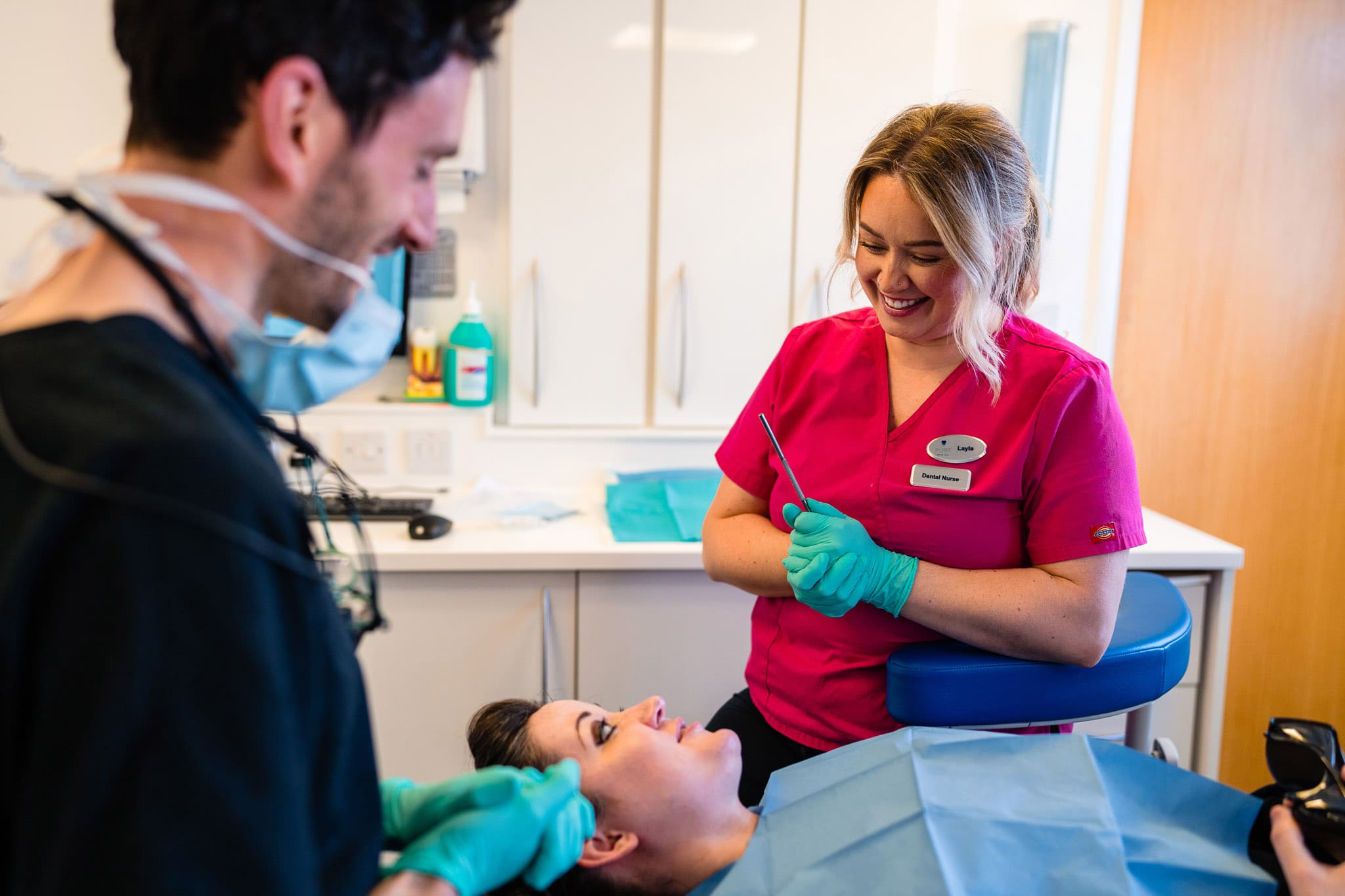
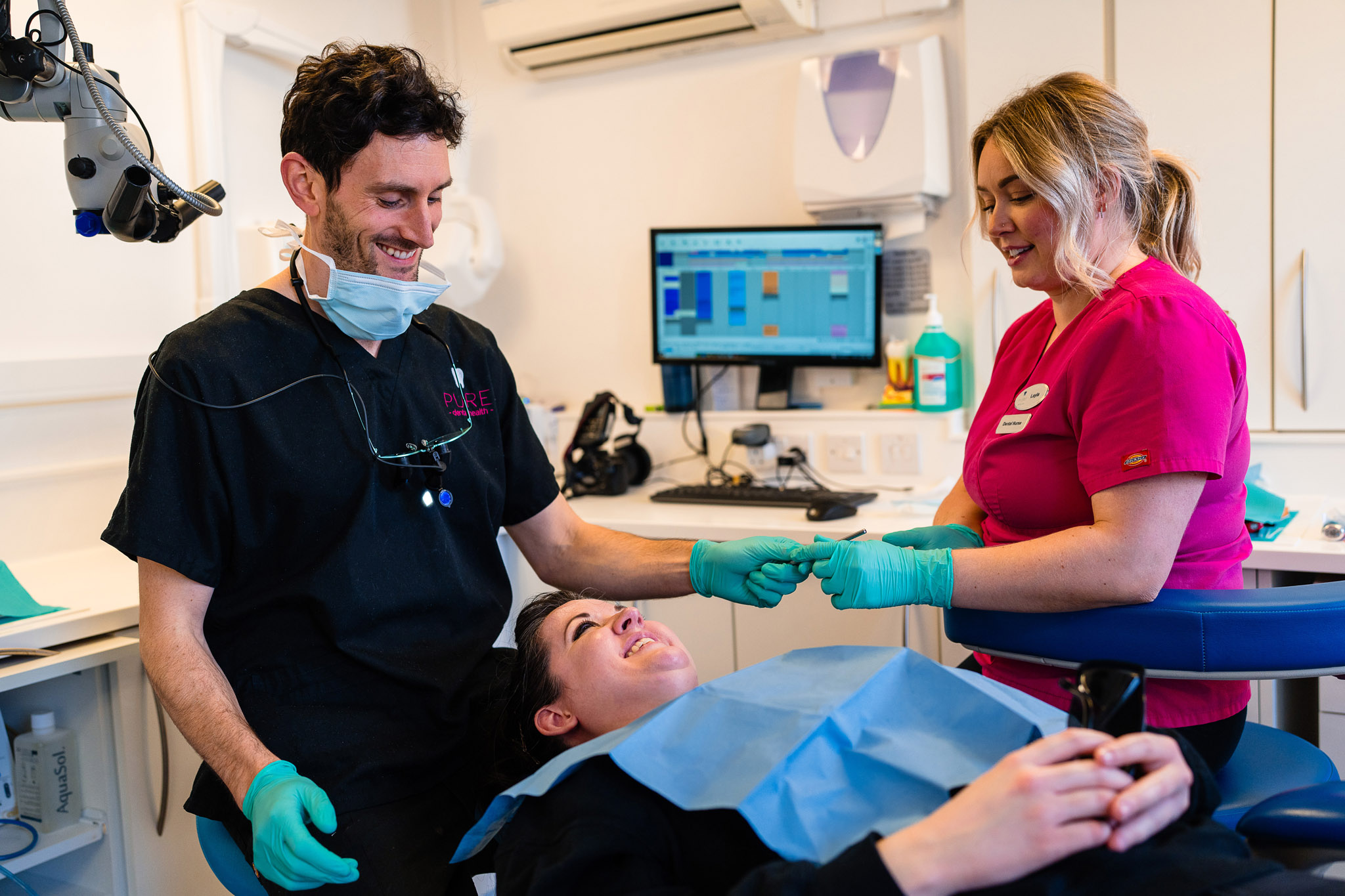
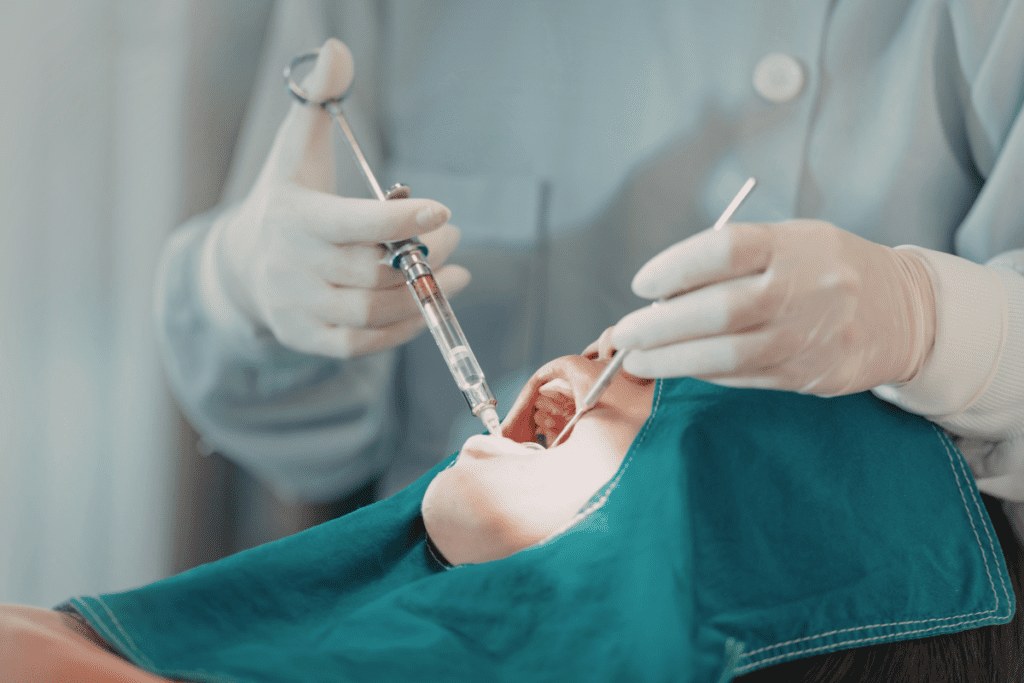
During the dental implant surgery itself, you should feel nothing painful. The area is fully numbed with local anaesthetic before anything begins, and your dentist won’t start until they’ve checked you can’t feel it. You’ll be aware of pressure, some pushing, and the sound of the drill, but not pain.
Afterwards, there will be some discomfort, and anyone who tells you otherwise is not being truthful. In a study of 332 implant patients, average pain peaked at around 4 out of 10 about six hours after surgery, dropped to roughly 2.5 by the next day, and was close to zero within a week. That’s a manageable few days of soreness, not the ordeal most people picture when thinking about how painful dental implants might be.
For context, most of our patients say it was easier than having a tooth out. Some describe it as no worse than a deep filling. The jawbone has very few nerve endings compared with your gums, which is why the surgery is far less dramatic than the description suggests.
If it’s the fear rather than the pain that’s stopping you, that’s a different problem, and one we deal with regularly. There’s more on that further down.
What dental implant surgery actually feels like
Most of the fear here comes from not knowing what’s about to happen. So here’s the whole thing explained, sensation by sensation.
Why you won’t feel pain during the procedure
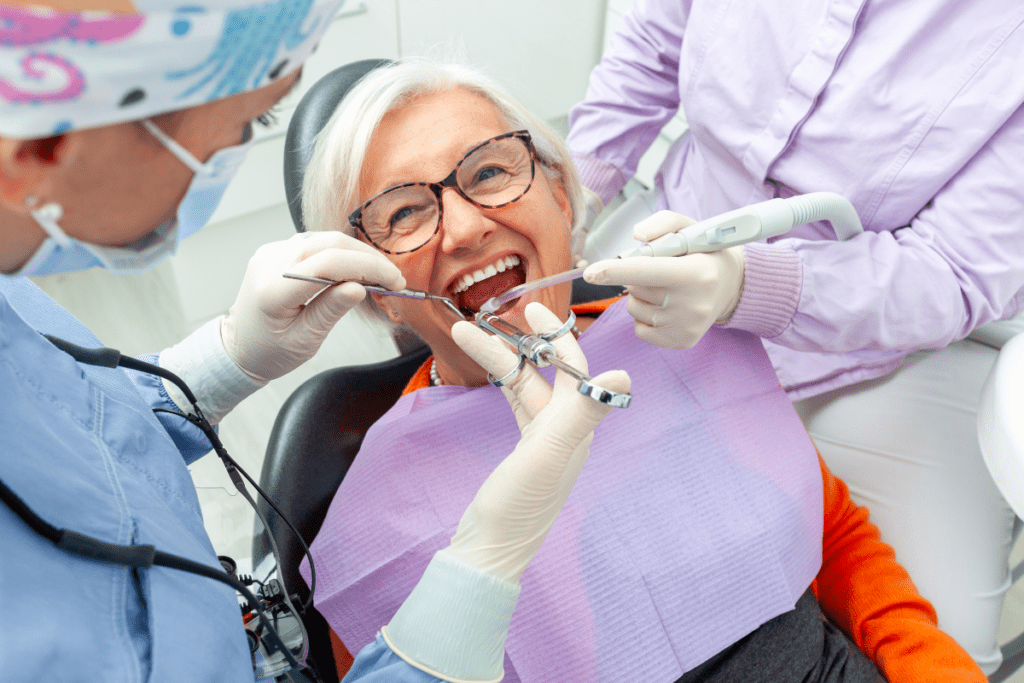
Before any injection, we put a numbing gel on the gum so you don’t feel the needle going in. The local anaesthetic then takes a few minutes to work properly, and we don’t even pick up an instrument until we’ve tested the area and you’ve confirmed you can’t feel it. If sensation starts creeping back partway through, we top it up.
Why jawbone hurts less than you’d think
Bone (where the implant goes) has very few nerve endings. Almost everything you feel in your mouth comes from the gum tissue and the nerve inside a tooth, and both of those will be thoroughly numbed throughout the implant procedure.
The sounds and sensations you will notice
Expect pressure, a sense of pushing, and some vibration through your jaw. You’ll hear the drill, though it runs slower and quieter than the one used for fillings. You might feel your dentist’s hand resting against your cheek, and you’ll notice water and suction. Whilst you’ll experience these sensations, none of them are painful, and knowing what to expect makes it much easier to sit through. Headphones can help, and plenty of our patients bring their own music.
How long you’re in the chair
A single implant usually takes around 45 minutes to an hour, and the placement itself is often only 15 to 20 minutes of that. The rest is preparation and making sure you’re comfortable. Multiple implants, or a bone graft alongside, will take longer, and we’ll tell you the expected time at your planning appointment.
How painful is a dental implant on a scale of 1 to 10?
Here we unpack the “peak of around 4 out of 10” mentioned previously to give you realistic expectations.
You’ll feel nothing during surgery, nothing for the first few hours while you’re still numb, and then a few hours in, the discomfort can arrive fairly suddenly as the anaesthetic fades. The evening following surgery will probably be the peak of your discomfort. By the following morning the pain will roughly halve, and by day three most people have stopped thinking about it. A week on, it’s usually gone.
Bone grafting or multiple implants push the numbers up. So does anxiety (which shouldn’t be considered a character flaw). People who arrive frightened consistently report more pain afterwards than people who arrive calm. That’s a large part of why we treat the nervous side of this as clinical rather than incidental.
How implant pain compares to an extraction, root canal or filling
Most people have a reference point already, so it’s easier to place implants against something you’ve already been through.
| Treatment | How it compares |
| Tooth extraction | Similar or slightly less. Most patients say implants were the easier of the two |
| Wisdom tooth removal | Considerably less, especially if the wisdom tooth was impacted |
| Root canal | Less soreness afterwards, though the appointment is longer |
| Deep filling | Comparable on the day. A few days more tenderness afterwards |
Important note: A failing tooth, or a denture rubbing the same sore spot every day, causes more discomfort over a year than implant surgery does in a week.
Pain after implant surgery: a day-by-day timeline
Knowing roughly what each day looks like takes a lot of the worry away. Here’s the usual pattern for a single implant, though bone grafting or multiple implants will stretch things out a little.
| When | What to expect |
| First 3 to 5 hours | Still numb and completely comfortable. This is the window to take your first dose of painkillers, before the anaesthetic wears off |
| Evening of surgery | The peak. Numbness fades, and a dull, throbbing ache sets in. Swelling starts to build. Uncomfortable, but manageable with ordinary painkillers. |
| Days 1 to 3 | Swelling and bruising are usually at their worst around day two, then start to settle. Soreness roughly halves by the morning after surgery. Most people take a day or two off work. |
| Days 4 to 7 | Noticeably better. Swelling largely gone, discomfort down to occasional tenderness. Most patients have stopped taking painkillers by now. Any stitches usually come out around day seven to ten. |
| Weeks 2 to 6 | Back to normal. The gum has healed over, and you shouldn’t feel anything from the implant site day to day. |
| Months 2 to 6 | Osseointegration, where the implant fuses with the bone. This takes months, but it is completely painless. You won’t feel it happening. |
The first few hours
Almost everyone underestimates this bit. You’ll walk out of the practice feeling fine, because you’re still numb, and it’s tempting to assume you’ve got away with it. Three to five hours later, the anaesthetic fades and the discomfort arrives quite quickly.
The single most useful thing you can do is take painkillers before that happens, rather than waiting until you’re already sore. Get home, get something soft to eat, and take your first dose while you’re still comfortable.
Long healing does not mean long pain
The phrase that frightens people most is “three to six months to heal”. It’s true, but it describes osseointegration, the slow process of bone growing around the titanium and locking it in place. That happens quietly and painlessly in the background while you get on with your life.
How to relieve pain after a dental implant
Most people need nothing more than what’s already in the bathroom cabinet. A few things make a real difference:
- Take painkillers before the numbness fades: Ibuprofen and paracetamol both work, and it’s usually safe for adults to take them together or alternate them. Check the NHS guidance on ibuprofen first if you have asthma, a stomach ulcer, or a heart, liver or kidney condition, and follow whatever we’ve prescribed you.
- Use an ice pack for the first 24 hours: Twenty minutes on, twenty minutes off against the cheek. This is for swelling more than pain, but the two are linked.
- Switch to warmth after day two: Once the swelling has peaked, gentle heat is more comfortable than cold and helps the bruising clear.
- Sleep propped up on an extra pillow for the first couple of nights: Keeping your head above your heart reduces the throbbing that tends to be worse lying flat.
- Rinse gently with warm salt water from the day after surgery: Half a teaspoon in a glass of warm water, several times a day. Let it fall out of your mouth instead of vigorous spitting.
- Rest for the first 48 hours: Nothing strenuous, no heavy lifting, no exercise. Raising your blood pressure raises the throbbing with it.
If the pain isn’t responding to over-the-counter painkillers, or it’s getting worse after day three, give us a call 24 hours on 01872 222 404.
Looking for the full aftercare instructions? What to eat, how to clean around the implant and what to avoid while it heals are all covered in our guide to dental implant aftercare.
Is bone grafting or a sinus lift more painful?
If you’ve been told you need one of these first, it’s usually because there isn’t quite enough bone to hold an implant securely. It’s a common finding, particularly if the tooth has been missing for a while. It adds a stage rather than changing the nature of the treatment.
Bone grafting
A small graft placed at the same time as the implant adds very little to how it feels afterwards. Most patients can’t separate it from the implant itself.
A larger graft done as its own procedure is a step up. Expect a few more days of soreness and more visible swelling, particularly if bone has been taken from elsewhere in your mouth, since you’ll then have two sites healing instead of one. It’s still managed with the same painkillers, and it still settles within a week or so.
Sinus lift
This sounds far worse than it is. The sinus floor above your upper back teeth is gently lifted to make room for bone, and because the work happens in an area with few nerve endings, the surgery itself feels much like a standard implant.
Expect more swelling around the cheek and under the eye, and a blocked or stuffy feeling on that side for a few days. You’ll be asked not to blow your nose for a week or two. Uncomfortable and slightly odd, but rarely painful.
Are full mouth or same-day dental implants more painful?
More implants means more surgery, so there is more to recover from, but the pain doesn’t scale the way people assume.
All-on-4 and full arch treatment
Replacing a full arch on four implants involves a longer appointment and more swelling than a single tooth. Most patients describe the first two or three days as tiring rather than agonising, and sedation is a common choice here simply because of how long you’re in the chair.
Many people having full arch treatment are already in daily discomfort from failing teeth or a loose denture. For them, one difficult week usually replaces years of it.
Does same-day teeth mean more discomfort?
Counterintuitively, often less. Same-day teeth means the implants and the temporary teeth go in during one appointment, so you have one surgical episode and one recovery.
You’ll also leave with teeth, which spares you the awkward gap stage that many people find harder than the soreness. The trade-off is a longer single appointment and a soft diet for a few weeks while everything settles.
Lynn had same-day treatment with us and describes herself as about the most nervous patient you could ever wish to meet. Her advice to anyone in the same position is that you won’t be frightened from the minute you meet the team.
Does the second appointment hurt? Uncovering your implant
If your implant was placed under the gum to heal, there’s a short second appointment a few months later to expose it and fit the healing abutment. Almost nobody writes about this second stage, which is a shame, because it’s often the point where people who’ve already been through the hard part start to worry again.
It’s a much smaller procedure than the first one: a small opening in the gum, no drilling into bone, and typically fifteen minutes or so under local anaesthetic.
Most patients describe it as the easiest appointment of the whole process. Expect mild tenderness for a day or two and little to no swelling, with paracetamol generally as much as anyone needs.
Not everyone needs this stage. If your implant was left with a healing cap already visible, or you had same-day teeth, we’ll go straight to fitting your permanent crown. We’ll tell you at the planning stage which route you’re on, so there are no surprises.
Fitting the final crown involves no surgery at all. It’s taking impressions and securing the tooth in place, and it doesn’t hurt.
When implant pain is not normal
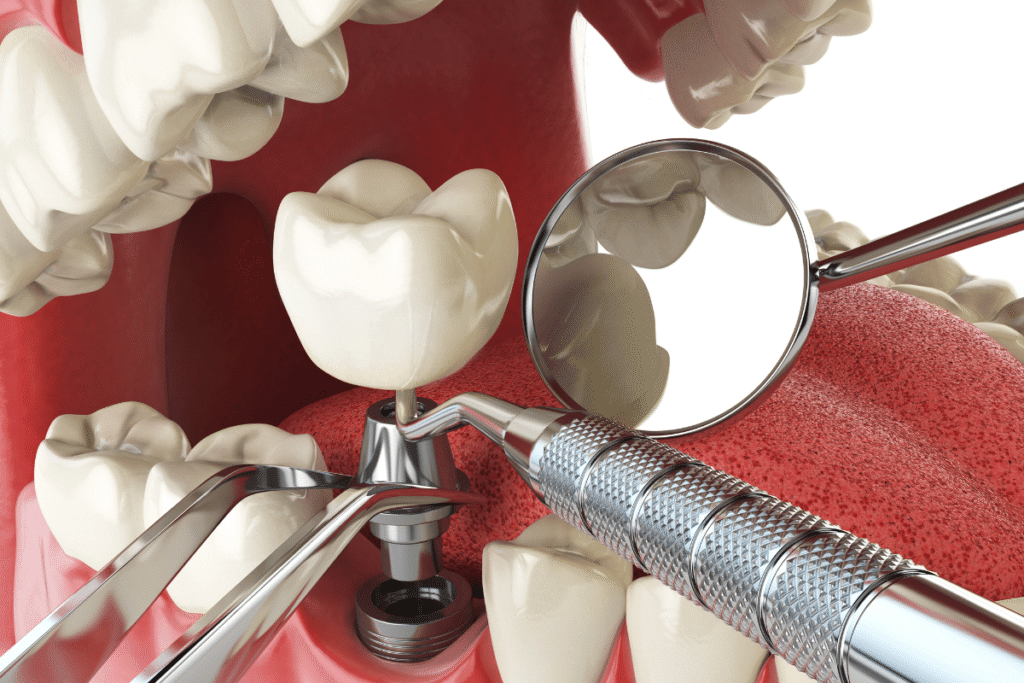
Everything described so far is expected. It’s important to take any pain that behaves differently more seriously: soreness that steadily improves is normal, soreness that plateaus or worsens is not.
Warning signs to act on
Call us if you notice any of the following:
- Pain that gets worse after day three
- Pain that doesn’t respond to over-the-counter painkillers
- Swelling that spreads to your eye, neck or throat, or keeps growing after day three
- A fever, or feeling generally unwell
- A bad taste, discharge or pus around the implant
- Difficulty opening your mouth
- An implant or crown that feels loose or moves
None of these means something has gone badly wrong. They mean you need to be seen and shouldn’t wait in case things escalate.
Infection and peri-implantitis
Infection in the days after surgery is uncommon but treatable, and usually shows up as increasing pain, swelling and a bad taste.
Peri-implantitis is different. It’s a gum condition that develops around an established implant, sometimes years later, and it’s the main long-term risk to an implant’s survival. Symptoms include red, sore or bleeding gums around the implant, and it can eventually loosen the implant if left untreated. The Oral Health Foundation has more on the signs. Caught early, it’s very manageable, which is the practical reason we ask implant patients to keep up regular hygienist appointments.
Nerve pain and numbness
Your lip, chin or tongue staying numb for a few hours after surgery is just the anaesthetic. Numbness, tingling or a burning sensation still present the next day is not, and should be reported straight away.
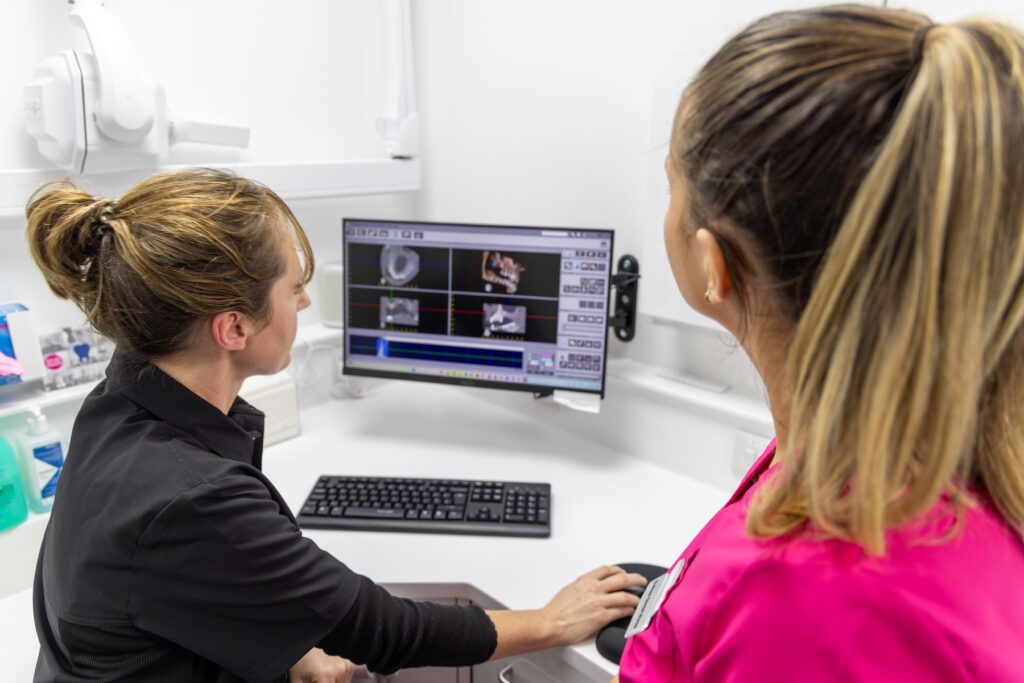
Nerve involvement is rare, and modern planning has made it rarer still. We take a 3D scan before placing any implant specifically to map where the nerves run, which is why lower back teeth are planned particularly carefully. Where it does happen, it’s usually temporary, but early assessment matters, so don’t sit on it.
What to do if you’re in pain right now
If you’re a Pure Dental patient, call us on 01872 222 404. The line is answered 24 hours a day, so you don’t have to wait until morning to speak to someone.
If you’re not our patient and you’re in real discomfort, our emergency dentist appointments are open to anyone in Cornwall. In the meantime, take painkillers as directed, keep the area clean with warm salt water, and don’t poke at it.

If it’s the fear that’s stopping you
For a lot of people, asking ‘are dental implants painful’ isn’t really about pain. It’s about being in the chair at all. Anxiety measurably increases how much pain people report after implant surgery, so arriving calm changes the outcome.
The Wand: needle-free injections
Most of the fear people carry into a dental practice traces back to the needle. The Wand delivers anaesthetic through a computer-controlled handpiece that releases it slowly and steadily, and it looks nothing like a syringe. The sting from a conventional injection comes from the fluid going in too fast, so removing that removes most of what people brace for.
Sedation options
If being aware of the procedure is the problem, sedation solves it. You stay conscious and able to respond, but relaxed, and most people remember very little afterwards. It’s a common choice for longer appointments like full arch treatment, and it’s available for any implant procedure if you’d prefer it. We’ll talk through what it involves and how you’ll feel afterwards before you decide.
What we do differently for nervous patients
Practical things, mostly. You can come and see the room before booking anything. We’ll agree a stop signal so you can pause at any point and know it will be respected. We explain what’s happening as we go, or say nothing at all, whichever you’d rather. Headphones and music are welcome. Appointments can be booked at quieter times.
And if you haven’t been to a dentist in years because of this, you won’t be told off about it. It’s one of the most common things people tell us at a first appointment, and it changes nothing about how you’ll be treated.
If this is the part you want to think about most, we’ve written separately about managing dental anxiety, and you can read more about our approach to nervous patients and sedation.
What our implant patients say about the pain
We could keep telling you it’s manageable, but you’ll probably more readily believe someone who has actually been through it!
Sarah came to us for implants and describes the whole experience in her own words, including the part most people want to hear: that it was pain free.
Margaret’s story is worth watching if it’s the dentist rather than the treatment that puts you off. She talks about not being frightened to go any more, which for a lot of people is the real change.
There are more in our patient stories, including several people who put treatment off for years before getting in touch.
The pain of doing nothing
It’s worth putting implant discomfort next to the alternative to more accurately guide you in making your decision.
A failing or infected tooth gets worse, and it tends to become urgent at the least convenient moment. A denture that rubs creates the same sore spot every day, and most people simply stop noticing they’ve adjusted their eating around it. And a gap where a tooth used to be causes the jawbone underneath to shrink over time, which makes treatment harder and more involved the longer it’s left.
Set against that, a few uncomfortable days is a short trade. If you’re weighing the options, we’ve compared implants and dentures and implants and bridges in more detail.
Still not sure?
You don’t have to commit to anything to get your questions answered. A free treatment advisor consultation is merely a conversation where you get the chance to talk through what implants would involve for you, what it would cost, and how we’d handle the parts you’re worried about.
Book a free treatment advisor consultation
Or call us on 01872 222 404. The line is answered 24 hours a day.
Medically reviewed by Mark Durnall, Principal Dentist at Pure Dental Health, Truro. Mark has over 25 years of experience in dentistry and has placed more than 3,000 implants.
Frequently Asked Questions
How long does pain last after dental implants?
Most people are uncomfortable for three to five days, with the worst of it on the evening of surgery. By the end of the first week, it’s usually gone. Bone grafting or multiple implants can add a few days.
Is a dental implant more painful than a tooth extraction?
Usually not. Most of our patients say the implant was the easier of the two, largely because bone has far fewer nerve endings than the gum and tooth being removed during an extraction.
Will I be awake during dental implant surgery?
Yes, unless you choose sedation. You’ll be fully numb but conscious, aware of pressure and sound but not pain. Sedation is available if you’d rather be less aware of the procedure.
What painkillers can I take after a dental implant?
Ibuprofen and paracetamol are usually enough, taken together or alternated. Follow whatever we’ve prescribed and check with a pharmacist if you take other medication or have a condition that makes ibuprofen unsuitable.
Can dental implants cause jaw pain?
Some jaw ache in the first few days is normal, often from keeping your mouth open during the appointment. Jaw pain that appears later or persists is worth having checked, as it can relate to how the bite is meeting.
Can dental implants cause nerve pain?
It’s rare. Numbness or tingling in the lip, chin or tongue that’s still there the day after surgery should be reported straight away. 3D scanning before placement is specifically to map where nerves run and avoid them.
Is it normal for my implant to throb?
A dull throb in the first two or three days is expected, particularly at night. A throb that intensifies after day three, or comes with swelling, fever or a bad taste, is not, and needs looking at.
How painful is it to have a dental implant removed?
Removal is uncommon, and when it’s needed, it’s done under local anaesthetic like the placement. Most people find it easier than the original surgery.
What are the downsides of dental implants?
Cost is the main one, and the time involved, since a full course can take several months. The surgery itself carries a short recovery, and implants need the same daily cleaning and regular hygienist visits as natural teeth or they can develop gum problems around them. Not everyone has enough bone for a straightforward placement, though grafting usually solves that.
What I wish I knew before dental implants?
The two things patients tell us most often are that the surgery was easier than expected, and that the worst point is the evening it’s done, when the anaesthetic wears off. Taking painkillers before that happens rather than after makes a bigger difference than anything else. The other is that the long healing period is painless, so a treatment that takes months doesn’t mean months of discomfort.
What’s the worst part of a dental implant?
For most people, it’s the few hours after the numbness fades on the day of surgery. For anyone anxious, the hardest part is usually the anticipation beforehand rather than anything that actually happens in the chair.
How long does pain last after dental implants?
Most people are uncomfortable for three to five days, with the worst of it on the evening of surgery. By the end of the first week, it’s usually gone. Bone grafting or multiple implants can add a few days.
Is a dental implant more painful than a tooth extraction?
Usually not. Most of our patients say the implant was the easier of the two, largely because bone has far fewer nerve endings than the gum and tooth being removed during an extraction.
Will I be awake during dental implant surgery?
Yes, unless you choose sedation. You’ll be fully numb but conscious, aware of pressure and sound but not pain. Sedation is available if you’d rather be less aware of the procedure.
What painkillers can I take after a dental implant?
Ibuprofen and paracetamol are usually enough, taken together or alternated. Follow whatever we’ve prescribed and check with a pharmacist if you take other medication or have a condition that makes ibuprofen unsuitable.
Can dental implants cause jaw pain?
Some jaw ache in the first few days is normal, often from keeping your mouth open during the appointment. Jaw pain that appears later or persists is worth having checked, as it can relate to how the bite is meeting.
Can dental implants cause nerve pain?
t’s rare. Numbness or tingling in the lip, chin or tongue that’s still there the day after surgery should be reported straight away. 3D scanning before placement is specifically to map where nerves run and avoid them.
Is it normal for my implant to throb?
A dull throb in the first two or three days is expected, particularly at night. A throb that intensifies after day three, or comes with swelling, fever or a bad taste, is not, and needs looking at.
How painful is it to have a dental implant removed?
Removal is uncommon, and when it’s needed, it’s done under local anaesthetic like the placement. Most people find it easier than the original surgery.