Losing a tooth can quietly change your life before anyone else even notices. If you’ve found yourself weighing up dental implants vs dentures, you’re already asking the right question. The choice you make now shapes how confidently you eat, speak and smile for years to come.
There’s no single right answer for everyone, but there is a right answer for you, and that comes down to understanding exactly how these two options differ, what they cost, and how each one will fit into your life. In this guide, we’ll walk you through it all simply so you can make that decision with confidence.
What’s the Difference Between Dental Implants and Dentures?
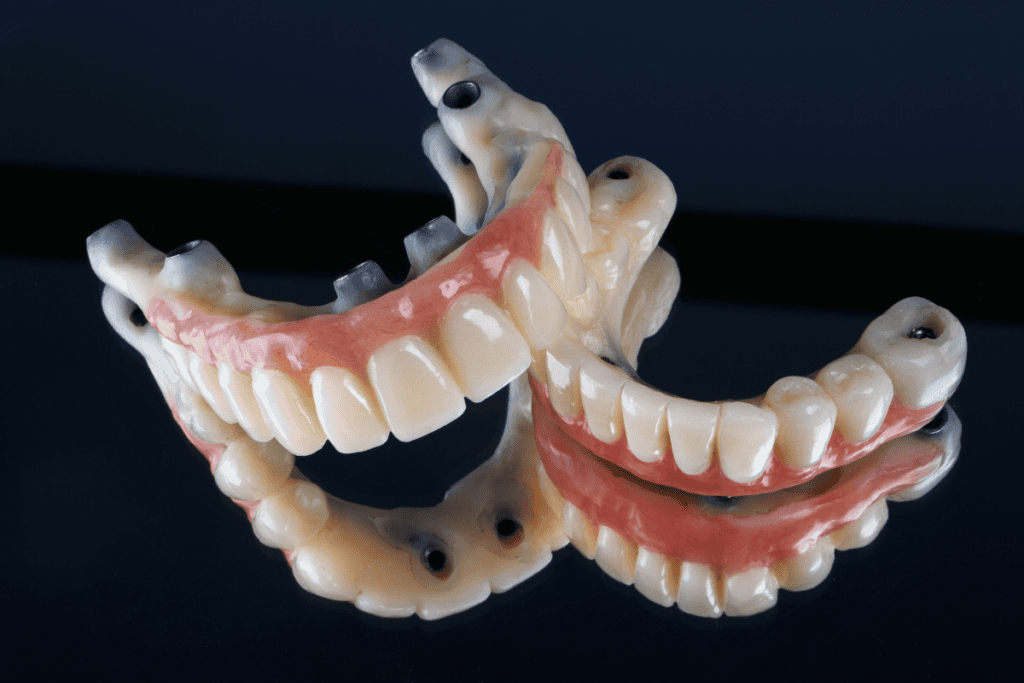
The main difference between dental implants and dentures comes down to how they’re held in place. Dental implants are small titanium posts surgically fixed into the jawbone to permanently replace a missing tooth root, while dentures are removable false teeth that sit over the gums and can be taken in and out.
Here’s what each one actually involves.
What Are Dental Implants?
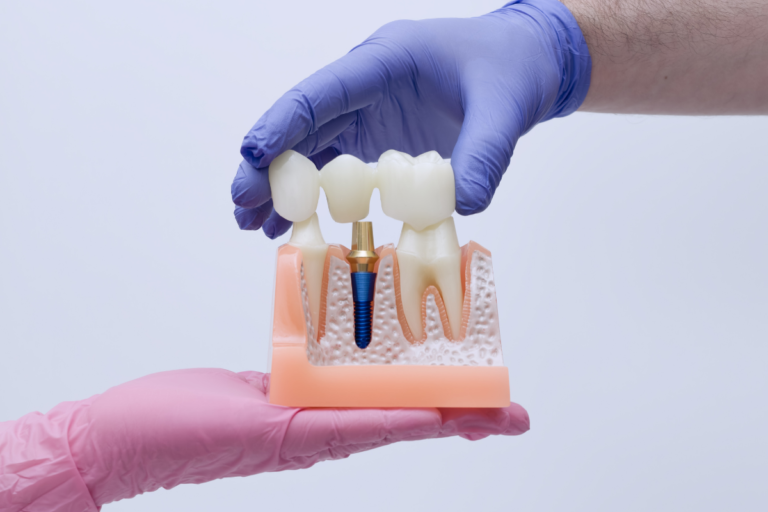
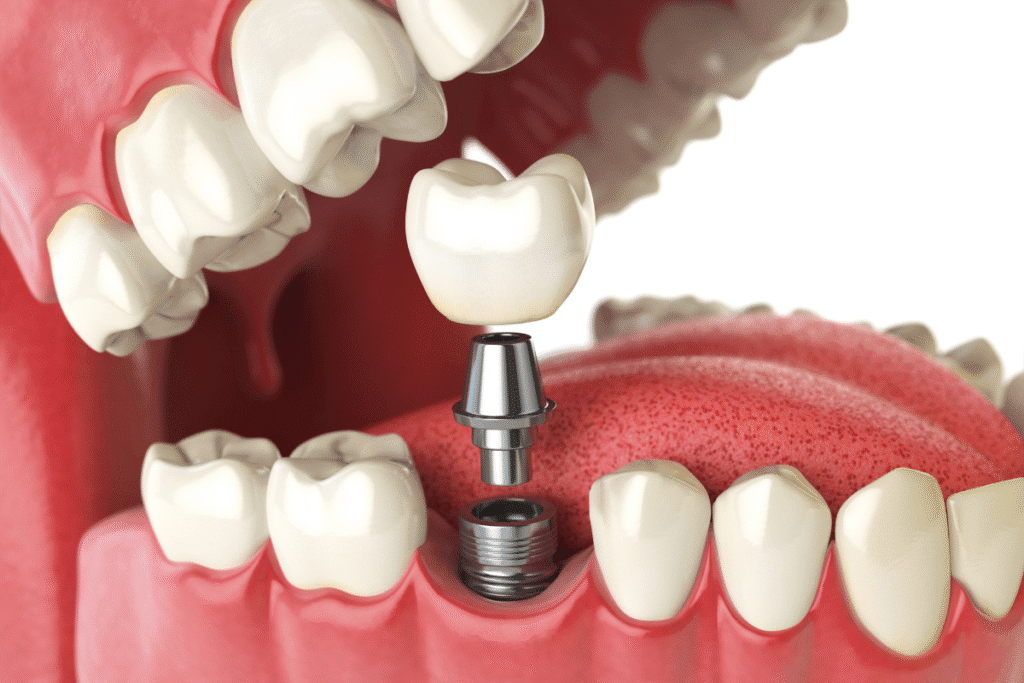
A dental implant is a titanium post that’s surgically placed into your jawbone where it fuses with the bone over a period of months through a process called osseointegration. Once healed, it acts as an artificial tooth root, providing a stable, permanent foundation for a crown, bridge, or denture.
Because implants are anchored directly into the bone, they look, feel and function much like natural teeth. With good care, they’re designed to last decades, and in many cases, a lifetime.
What Are Dentures?
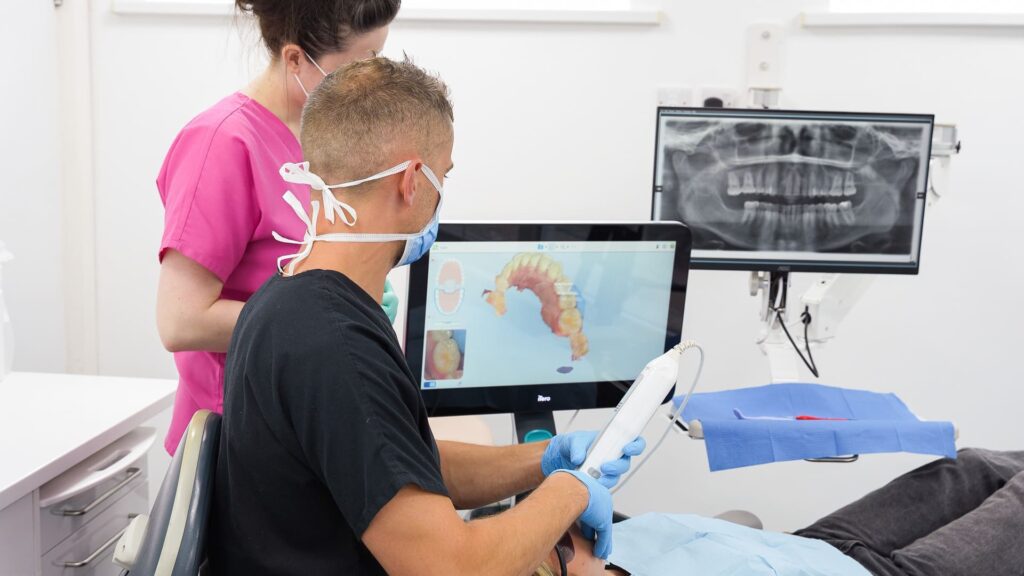
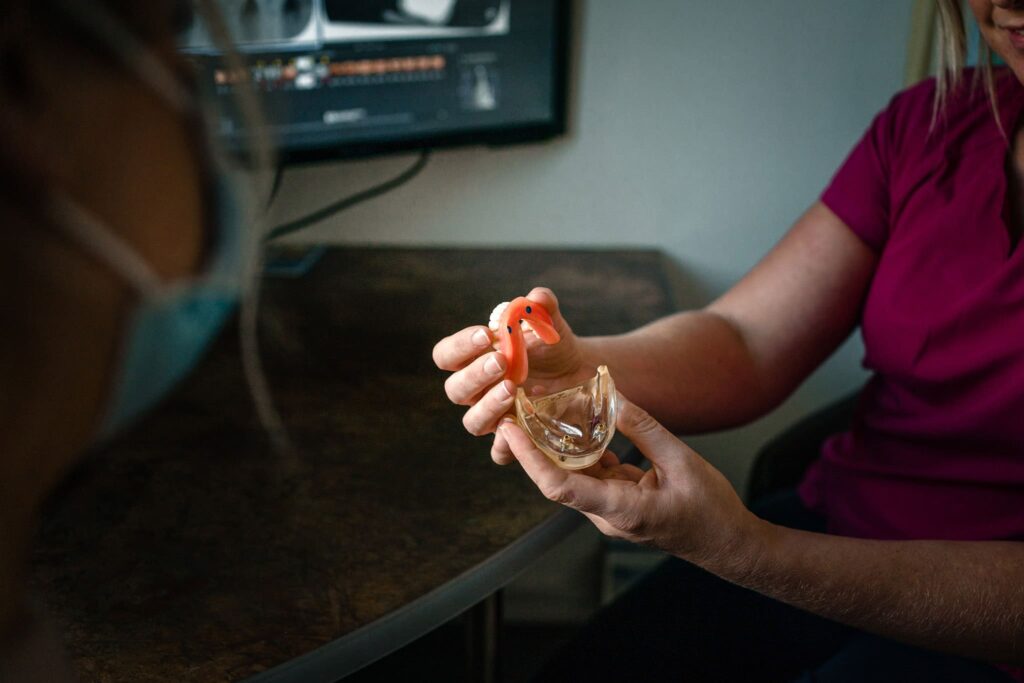
Dentures are removable prosthetic teeth, made from acrylic or a metal framework, that sit on top of your gums or clip onto any remaining natural teeth. They can replace a full arch or just a few missing teeth, and unlike implants, no surgery is required, which makes them a quicker and typically more affordable route to a complete smile.
The trade-off is that dentures rest on the gum rather than being fixed in place, so movement, adhesive use, and the need for periodic relining or replacement as your jawbone and gums naturally change shape over time are all part of day-to-day life with them.
Main Differences Between Permanent and Removable Tooth Replacements
At a glance, the two options differ in several practical ways:
- Fixed vs removable: Implants stay in place permanently; dentures come out for cleaning and overnight rest
- Surgical vs non-surgical: Implants require a surgical procedure and healing time; dentures don’t
- Bone health: Implants help preserve jawbone density; dentures can’t prevent the bone loss that naturally follows tooth loss
- Daily maintenance: Implants are cared for like natural teeth; dentures need removing, soaking, and cleaning separately
- Cost profile: Dentures usually cost less upfront but may need adjusting or replacing over the years; implants have a higher initial cost but are built for the long term
We’ll break each of these down in more depth as we go, starting with a full side-by-side comparison.
Dental Implants vs Dentures: Full Comparison Table
If you’re the kind of person who likes to see everything laid out side by side before making a decision, this table gives you the headline picture.
| Dental Implants | Dentures | |
| Cost | Higher upfront cost, from £3,000 per tooth | Lower upfront cost, but ongoing adjustments add up |
| Lifespan | Can last decades, often a lifetime with good care | Typically need replacing every 5-8 years |
| Maintenance | Brush and floss as normal, no special routine | Daily removal, soaking and cleaning required |
| Comfort | Feels and functions like a natural tooth | Can slip or rub, especially early on |
| Bone health | Preserves jawbone density long-term | Doesn’t prevent bone loss, may accelerate it |
| Procedure time | Several months, including healing time | Can often be fitted within a few weeks |
| Suitability | Requires sufficient bone density and good general health | Suitable for most patients, with few exclusions |
The Best of Both with Implant-Retained Dentures
For many patients, the ideal solution isn’t choosing one over the other, it’s combining them. Implant-retained dentures use a small number of strategically placed implants to anchor a denture firmly in place, giving you far more stability and confidence than a traditional denture, at a fraction of the cost of fixed, implant-retained teeth (where every single tooth is individually supported by its own implant).
This option can be genuinely life-changing if you’re currently living with a loose or ill-fitting denture. No more worrying about it slipping while you eat or speak, no more messy adhesives, and no more avoiding your favourite foods. By securing the denture to just a few implants, patients get the confidence and function of a fixed solution without paying for a full set of individual implants, making it one of the most cost-effective ways to transform a smile that’s been holding you back.
Cost of Dental Implants vs Dentures in the UK
Understanding the cost of dental implants is usually the first factor when deciding on dental implants vs dentures. Here’s what you can realistically expect to pay, and where the real value lies over the longer term.
Average Cost of Dental Implants
At Pure Dental Health, a single dental implant fully restored with a crown starts from £3,000, covering the implant, abutment and crown. For patients replacing several teeth or a full arch, options like denture stabilisation start from £6,500, and Same Day Teeth (a full set of fixed teeth supported by implants placed in a single appointment) starts from £16,500. It’s a bigger investment upfront, but one designed to last decades.
Average Cost of Dentures
Dentures typically cost less to begin with, but the exact price depends on the material and how many teeth need replacing. Beyond the initial fitting, it’s worth budgeting for ongoing costs too, such as relines, adjustments, and eventual replacement as your gums and jawbone naturally change shape over time.
NHS vs Private Treatment, What’s Actually Available
NHS dental treatment in England is grouped into three charging bands, and NHS dentures fall under Band 3, currently £332.10, which covers the full process from assessment to fitting.
Dental implants, by contrast, are rarely available on the NHS; they’re generally only offered where there’s a clear medical need, such as following oral cancer treatment or significant trauma, rather than for routine tooth loss.
For most people, that means private treatment is the realistic route to implants. You can find full details of what NHS dental treatment costs on the NHS website, and our own private dental pricing page gives a clear breakdown of what to expect with us.
Are There Financing Options Available for Dental Implants or Dentures?
Yes. We believe cost shouldn’t be the reason someone lives with a smile they’re not happy with, which is why we offer interest-free finance plans and flexible monthly payment options for both implants and dentures. The best way to understand what you’d actually pay is a free treatment advisor consultation, where we’ll talk through your options and give you a personalised, itemised estimate with no obligation.
Cost of Dental Implants vs Dentures in the UK
Cost is usually the first question, and understandably so, as dental implants vs dentures is significant decision either way. Here’s what you can realistically expect to pay, and where the real value lies over the longer term.
Pros and Cons of Dental Implants vs Dentures
Neither option is universally “better”; it depends on your health, budget, and what matters most to you day to day. Here’s a balanced look at both, so you can weigh them up for yourself.
Pros and Cons of Dental Implants
Pros:
- Look, feel and function like natural teeth
- Fixed permanently in place, no slipping, no adhesive
- Help preserve jawbone density and facial structure
- Don’t affect or rely on neighbouring healthy teeth
- Can last decades, often a lifetime, with proper care
- No special cleaning routine beyond normal brushing and flossing
Cons:
- Higher upfront cost than dentures
- Requires a surgical procedure and a healing period of several months
- Needs sufficient jawbone density, though bone grafting can often address this
- Not suitable for everyone; general health and lifestyle factors (such as smoking) can affect eligibility
Pros and Cons of Dentures
Pros:
- Lower upfront cost
- Non-surgical, quicker to fit
- Suitable for most patients, with very few exclusions
- Can be adjusted relatively easily as your mouth changes
- A well-established, familiar option with decades of clinical use
Cons:
- Can slip or feel loose, particularly with lower dentures
- Often require adhesive for a secure fit
- Don’t prevent jawbone loss, and may accelerate it over time
- Need to be removed and cleaned daily, and left out overnight
- Typically need relining or replacing every 5-8 years
- Can affect speech and chewing confidence, especially in the early weeks
For many people, the deciding factor is which set of trade-offs fits their life, budget and priorities right now. If dentures feel right but stability is your main concern, it’s worth knowing there’s a middle ground too, which we’ll come to shortly.
Comfort, Confidence and Daily Life: What to Expect
Beyond the clinical facts, what really matters is how each option feels in everyday life, at the dinner table, in conversation, and every time you smile.
Eating and Chewing
Dental implants function like natural teeth, so you can bite and chew with confidence, including foods you might have avoided with dentures, like apples, steak or crusty bread. Dentures can limit bite strength, particularly with harder or chewier foods, and many wearers naturally adapt their diet to avoid discomfort or the risk of slipping.
Speech and Adjustment
Implants have no impact on speech once healed, since there’s no removable plate to work around. New dentures, however, often take a few weeks to adjust to; some wearers notice a temporary change in pronunciation or a feeling of bulkiness, though this typically settles as the mouth adapts.
Confidence and Appearance
This is where the difference is felt most. Implants eliminate the worry of slipping or visible movement, letting you laugh, eat and speak without a second thought. Well-fitted dentures can still restore a natural-looking smile, but many wearers describe an underlying awareness of them, especially in social situations.
How Do Dental Implants and Dentures Affect Long-Term Oral Health?
Tooth replacement affects the health of your jaw, gums and remaining teeth for years to come. When considering dental implants vs dentures it is important to consider the following:
Bone Loss and Facial Structure
When a tooth is lost, the jawbone beneath it naturally begins to shrink over time, since it’s no longer stimulated by a tooth root. Dental implants replicate that root and provide ongoing stimulation, helping to preserve bone density and facial structure. Dentures sit on top of the gum rather than in the bone, so they can’t prevent this process, and as the jawbone changes shape, dentures often need relining or replacing to maintain a good fit.
Impact on Surrounding Teeth and Gums
Implants are self-supporting and don’t rely on neighbouring teeth, so healthy teeth either side are left undisturbed. Dentures, particularly partial dentures secured with clasps, can place extra pressure on adjacent natural teeth over time. Ill-fitting dentures can also trap food and bacteria against the gums, increasing the risk of irritation or gum disease if not cleaned thoroughly and checked regularly by a dentist.
Implant-Supported Dentures: The Middle-Ground Option
If full dental implants feel like a bigger step than you’re ready for, but you’re tired of loose dentures, there’s a third option worth knowing about.
Implants for dentures use a small number of implants to anchor a denture securely in place, combining the stability of implants with the lower cost and less invasive approach of dentures. The result is a denture that clips securely onto the implants, eliminating slipping and reducing the need for adhesive, while still being removable for cleaning. It’s a popular choice for patients who’ve struggled with traditional dentures but aren’t ready for, or don’t need, a full set of individual implants.
Choosing the Right Dentist and Implant System
What to Ask About Implant Success Rates
Success rates depend as much on the dentist’s skill and experience as they do on the implant system itself. Before committing to treatment, it’s worth asking your dentist how many implants they’ve placed, what their personal success rate is, and how they handle cases involving bone loss or more complex needs.
At Pure Dental Health, Mark Durnall has placed and restored over 3,000 implants, giving patients a clear, evidenced answer to that question rather than a general industry average.
What to Look for When Choosing Where to Get Dentures or Implants Fitted
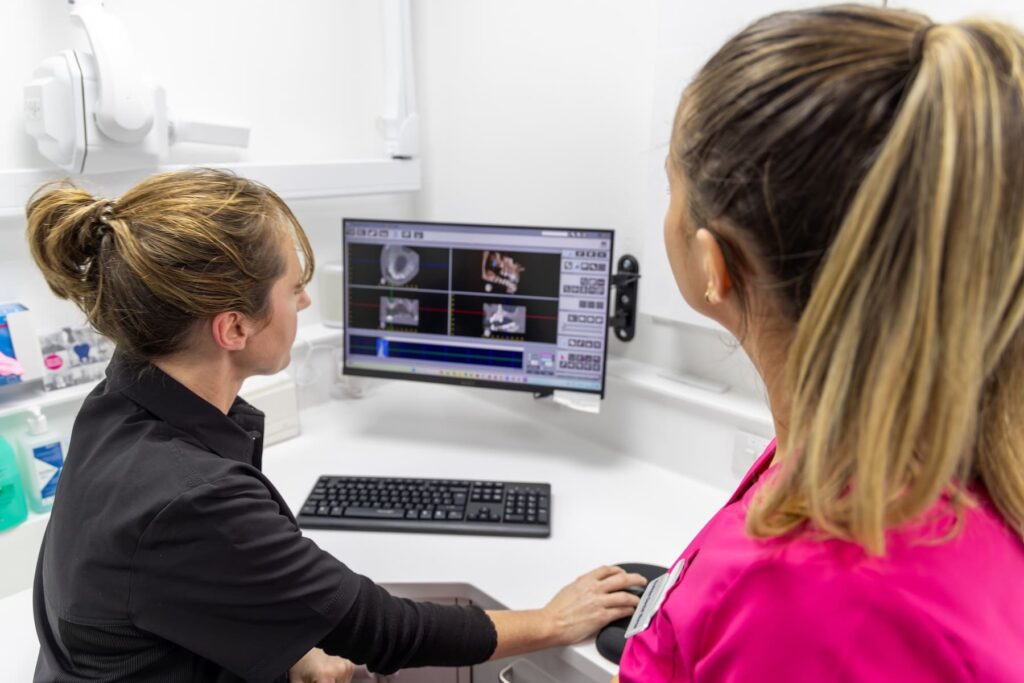
Beyond price, look for a practice that offers thorough planning, clear before-and-after case examples, and genuine patient reviews or testimonials you can trust. A proper consultation should include a full assessment of your bone density and oral health, not just a quote.
It’s also worth asking about aftercare, guarantees, and what happens if adjustments are needed down the line.
Who Is Suitable for Dental Implants, and Who Should Consider Dentures?
Bone Density and General Health Considerations
Implants require enough jawbone to support them, though bone grafting can often address this if levels are low. Good general health, healthy gums, and being a non-smoker (or willing to quit) all improve success rates. Certain conditions, like uncontrolled diabetes, may need managing first. Dentures have far fewer restrictions, making them a viable option for almost anyone.
Is It Too Late? Dental Implants for Seniors
Age alone is rarely a barrier to implants; what matters is bone density and general health. Many of our patients begin implant treatment well into their 70s and 80s. Read more in our dedicated guide. Dental Implants for Seniors.
Real Patient Experiences at Pure Dental
Numbers and comparisons only tell half the story; what matters is how each option feels once it’s part of your life.
Michelle, one of our implant patients, describes no longer needing to hide the gap in her smile. Others have told us they’ve regained the confidence to eat out, and laugh freely again after years of managing loose dentures. You can watch their stories and read more on our Dental Implants page.
How to Decide: Dental Implants or Dentures?
Ask yourself:
- Budget: Can you invest more upfront for a longer-term solution, or is a lower initial cost essential?
- Timeline: Are you comfortable with several months of treatment, or do you need a quicker fix?
- Health: Do you have sufficient bone density and general health for surgery?
- Priorities: Is permanent stability worth more to you than avoiding surgery?
There’s no wrong answer, only the right one for you, and that’s exactly what a free consultation can help you find.
Book Your Free Treatment Advisor Consultation
Whichever option you’re leaning towards, the best next step is a conversation, not a decision made alone. Our free treatment advisor consultation gives you a clear, personalised picture of your options and costs, with no obligation. Book yours today and take the first step towards a smile you don’t have to think twice about.
Dental Implants vs Dentures: FAQs
Is it too late for dental implants?
No. Suitability depends on bone density and general health, not age.
Can you get dental implants if you already wear dentures?
Yes, many patients transition from dentures to implants, including implant-supported dentures as a halfway option.
Do dental implants feel like real teeth?
Yes, once healed, implants function and feel like natural teeth, with no movement or adhesive needed.
What happens if I don’t replace a missing tooth?
The jawbone begins to shrink, neighbouring teeth can shift, and chewing and speech may be affected over time.
How long do implants last compared to dentures?
Implants can last decades, often a lifetime, while dentures typically need replacing every 5-8 years.
Why would a dentist not recommend an implant?
Usually due to insufficient bone density, uncontrolled gum disease, certain health conditions like uncontrolled diabetes, heavy smoking, or if a patient isn’t able to commit to the healing process. In these cases, bone grafting or an alternative like implant-supported dentures may be suggested instead.
Which one is better, dental implants or dentures?
Neither is universally better; it depends on your budget, health and priorities. Implants offer greater stability and longevity; dentures offer a lower upfront cost and no surgery. A consultation is the best way to find out which suits you.
What is the downside of having dental implants?
The main downsides are the higher upfront cost, the surgical procedure itself, and a treatment timeline that can take several months to complete, including healing time before the final restoration is fitted.
What I wish I knew before dental implants?
Patients often say they wish they’d known how gradual the process is, planning, healing and fitting can take months, not days, and that choosing an experienced implantologist matters just as much as the implant brand itself.