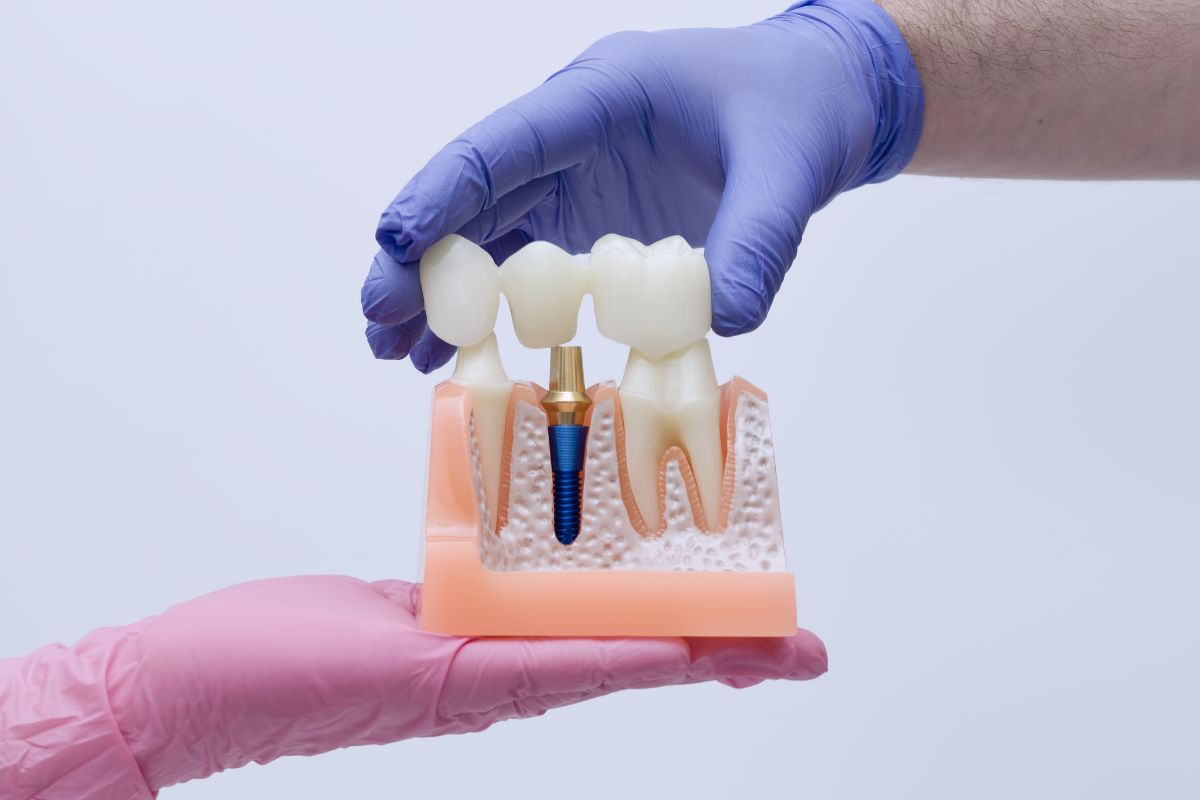
Dental bridges vs implants? This is the question most people face once there’s a gap where a tooth used to be. Both options fill the space caused by tooth loss, but the process, the price and the lifespan can vary quite a bit. Here’s what each option actually involves to help you decide what’s right for you and your smile.
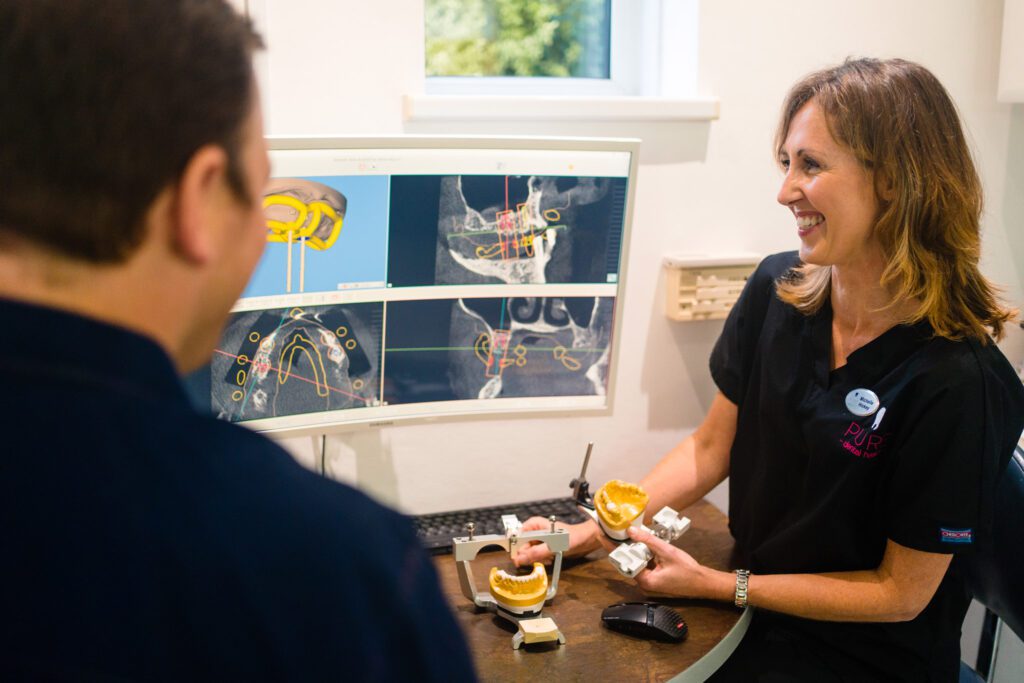
Bridges vs Implants at a Glance
At a glance, here’s how the two options compare when you’re considering the best option for you.
| Dental Bridge | Dental Implant | |
| Cost | £3,000* privately (NHS Band 3: £332.10, if clinically eligible) | From £3,000* privately (NHS funding is rare, usually limited to trauma, cancer or congenital cases) |
| Time | Usually 2–3 appointments over 2–4 weeks | 3–6 months in total, including healing time before the crown is fitted |
| Lifespan | 10–15 years on average | 25+ years, and often a lifetime with proper care |
| Invasiveness | Non-surgical, though the teeth on either side of the gap need to be filed down to hold the crowns | Minor surgery to place the implant post into the jawbone |
| Candidacy | Best if the teeth next to the gap are healthy and strong enough to support crowns | Best if there’s enough healthy jawbone. A bone graft may be needed if not |
Dental Bridge
How It Works
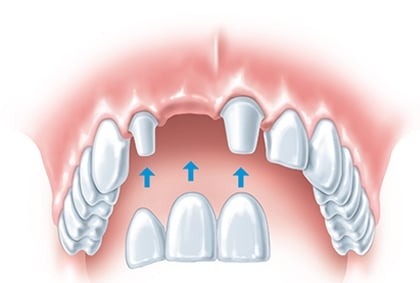
A dental bridge replaces a missing tooth by anchoring a false tooth (called a pontic) to the natural teeth on either side of the gap. Your dentist will shape those neighbouring teeth to hold crowns, then fix the bridge in place so it sits securely without needing surgery. It’s one of the most established ways to fill a gap, and for many patients it’s a familiar, low-fuss option.
Time
Fitting a bridge usually takes two to three appointments over two to four weeks. The first visit is for shaping the abutment teeth and taking impressions; you might wear a temporary bridge while the permanent one is made in a lab, then a final visit to fit it. No healing period is needed beforehand, which is one of the main reasons people choose a bridge over an implant.
Cost
Privately, a bridge typically costs around £3,000+ depending on the material and how many teeth it needs to replace. If you’re eligible for NHS treatment, a bridge falls under Band 3, currently £332.10 in England, though your dentist will need to confirm it’s clinically appropriate for your case.
Drawbacks
The teeth either side of the gap need to be filed down to hold the crowns, even if they were perfectly healthy beforehand. This is permanent and can’t be undone. A bridge also doesn’t stop the jawbone beneath the missing tooth from gradually shrinking, since there’s nothing there stimulating it the way a natural root would.
Lifespan
A well-looked-after bridge typically lasts 10 to 15 years before it needs replacing. Good oral hygiene, particularly cleaning underneath the pontic, makes a real difference to its longevity.
Dental Implant
How It Works
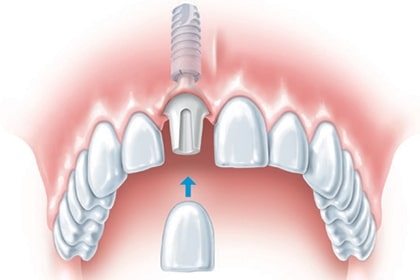
A dental implant replaces the tooth root as well as the tooth itself. A titanium post is placed into the jawbone, where it fuses with the bone over time in a process called osseointegration. Once that’s healed, a custom crown is fitted on top, giving you something that looks, feels and functions much like a natural tooth.
Time
Implants take longer, usually three to six months from start to finish. That covers the initial placement, a healing period while the post integrates with the bone, and then fitting the final crown. If a bone graft is needed first, it can take a little longer still.
Cost
Privately, a single implant typically costs between £1,800 and £3,800 in the UK. NHS funding for implants is rare and generally limited to cases involving major trauma, cancer treatment or a congenital condition, so most people considering an implant will be looking at private treatment or a payment plan.
Drawbacks
A dental implant involves minor surgery, which understandably can make some people more nervous, but most patients say the procedure itself is far more comfortable than they expected. Any discomfort afterwards is usually manageable with over-the-counter painkillers. You’ll also need enough healthy jawbone to support the implant, and a bone graft may be needed.
Lifespan
Looked after well, an implant can last 25 years or more, often for life. Because it replaces the root as well as the crown, it also helps preserve the jawbone underneath, something a bridge can’t do.
Bridge or Implant: Which Wins on What Matters to You
Rather than looking at each option in isolation, here’s how each option looks depending on what matters most to you:
Best for Cost
If upfront cost is the deciding factor, a bridge might be the better option. At £750 to £2,400 privately, or £332.10 if you qualify for NHS treatment, it’s a fraction of what an implant costs to start with. Worth bearing in mind, though, a bridge usually needs replacing at least once within 25 years, so the cost gap narrows over time.
Best for Longevity
An implant wins here. Lasting 25 years or more, an implant is built to be a one-time treatment rather than something you’ll revisit down the line. If you’d rather deal with this once and move on, that longevity is usually the deciding factor.
Best for a Nervous Patient
This one’s less clear-cut and entirely depends on the patient. A bridge avoids surgery altogether, which is understandably appealing if the idea of any procedure makes you anxious. But implant placement is more straightforward than you’d imagine, and options like The Wand or dental sedation can make the whole experience far calmer than expected. If dental anxiety has been holding you back from either option, it’s worth having that conversation with your dentist before ruling anything out.
Best if You Have Gum or Bone Loss
Significant bone loss can mean there isn’t enough to anchor an implant securely without a bone graft first, which can add time and cost. A bridge doesn’t rely on bone density in the same way, so it can be the more straightforward option if gum disease or bone loss is part of your picture. That said, a graft is often very achievable, so it’s worth getting assessed properly rather than assuming an implant isn’t for you.
Implant-Supported Bridges
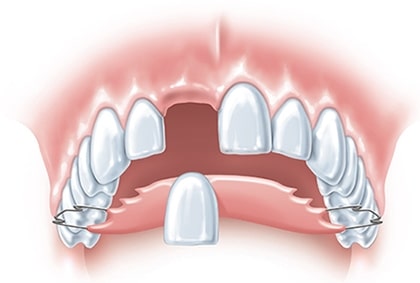
There’s a hybrid third option that combines elements of both options. Rather than anchoring a bridge to your natural teeth, it’s secured to one or more dental implants instead. This is particularly useful if you’re missing several teeth in a row and don’t want to file down healthy teeth to support a traditional bridge, or if you want something more stable than a bridge but don’t need a full implant for every missing tooth.
It brings a lot of the durability benefits of implants (no reliance on neighbouring teeth, better preservation of the jawbone) while often being more cost-effective than placing an individual implant for every gap. It’s a good middle ground worth asking your dentist about if you’re replacing more than one tooth.
NHS vs Private in Cornwall
If you’re eligible for NHS treatment, a bridge sits under Band 3 and currently costs £332.10, regardless of how many teeth it’s replacing. It’s one of the better value treatments the NHS offers, but your dentist has to be able to confirm a bridge is clinically appropriate, and not everyone will be.
Implants are a different story. NHS funding for implants is rare, so most people in Cornwall considering an implant will be looking at private treatment.
That doesn’t have to mean paying the full cost upfront. At Pure Dental, our membership plan starts from £25.25 a month and gives you a more manageable way into private care, and we also offer flexible finance options if you’d rather spread the cost of treatment itself. It’s worth having an honest conversation with your dentist about what’s realistic for your circumstances, both clinically and financially, before you commit to either route.

Real Patients, Real Results
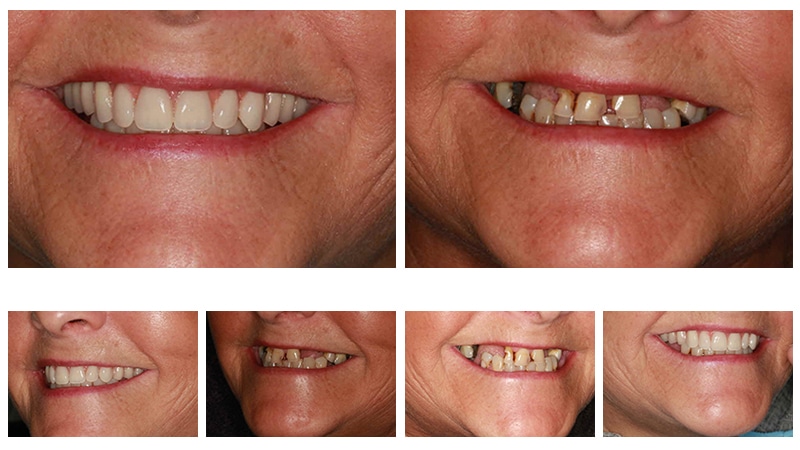
Reading about bridges and implants is one thing. Seeing what they’ve actually done for real people is another. Mark Durnall has placed over 3,000 implants across his career, and patients like Michelle, Lynn and Sarah have shared exactly what that experience was like for them, from the first consultation through to the moment they got their smile back. If you’d like to see and hear it for yourself before you decide, our testimonials and before-and-after gallery are worth a look.
Which Option Is Right for You
There’s no single right answer here, but there is a right answer for you, and it usually comes down to what matters most in your particular situation.
Choose a Bridge If
- You want a quicker fix without surgery
- Budget is your main priority right now
- The teeth on either side of the gap are healthy and strong
- You have some bone loss and aren’t ready for a graft
Choose an Implant If
- You want a long-term, one-time solution
- You’d rather not touch the healthy teeth next to the gap
- Preserving your jawbone matters to you
- You’re comfortable with a longer treatment timeline in exchange for lasting results
What About Dentures?
Bridges and implants aren’t the only options if you’re missing one or more teeth. Dentures are still a common choice, particularly if you’re replacing several teeth or want a more affordable, removable solution. We’ve covered how they compare to implants in detail in our Dental Implants vs Dentures guide, worth a read if you think that route might suit you better.
Book a Free Treatment Advisor Consultation
Whichever way you’re leaning, the best next step is a proper conversation with someone who can look at your mouth, not just your search results. Our free treatment advisor consultation gives you the space to ask every question you have, with no pressure and no judgement, so you can walk away with a clear plan built around what actually works for you. Book yours today and let’s find the right fit for your smile.

Bridges vs Implants – FAQs
How long do dental implants last?
With good care, an implant can last 25 years or more, often for life. Because it fuses with your jawbone, it doesn’t wear down the way a bridge does over time.
Are dental implants painful?
Most patients say the procedure is more comfortable than they expected. It’s done under local anaesthetic, and any soreness afterwards is usually manageable with over-the-counter painkillers.
What’s a bridge in dentistry?
A bridge is a false tooth held in place by crowns fitted to the natural teeth on either side of the gap. It’s non-surgical and typically fitted over two to three appointments.
Can you get a bridge and an implant together?
Yes. An implant-supported bridge combines both, anchoring a bridge to one or more implants instead of your natural teeth. It’s a good option if you’re missing several teeth in a row and don’t want to rely on healthy teeth for support.
Is it better to have a bridge or an implant?
It depends on what matters most to you. A bridge is quicker and cheaper upfront, while an implant lasts far longer and doesn’t affect the teeth next to the gap. Your dentist can help you weigh that up based on your own mouth and priorities.
Why would a dentist not recommend a bridge?
Usually because the teeth either side of the gap aren’t strong enough to support the crowns, or because filing down otherwise healthy teeth isn’t the best long-term choice for your oral health. In those cases, an implant is often the better fit.
What does a 1 tooth bridge cost?
A single-tooth bridge typically costs between £750 and £2,400 privately, or £332.10 on the NHS if you’re eligible.
Should I get an implant instead of a bridge?
If you want a one-time, long-lasting solution and don’t want to touch the healthy teeth next to the gap, an implant is usually the stronger choice. If cost or avoiding surgery matters more right now, a bridge is still a solid option.
Is a bridge or implant better for a front tooth?
Both can look natural, but implants tend to hold their appearance better over time since they don’t rely on surrounding teeth or risk visible wear at the gumline. For something as visible as a front tooth, many patients find the extra investment in an implant worthwhile.